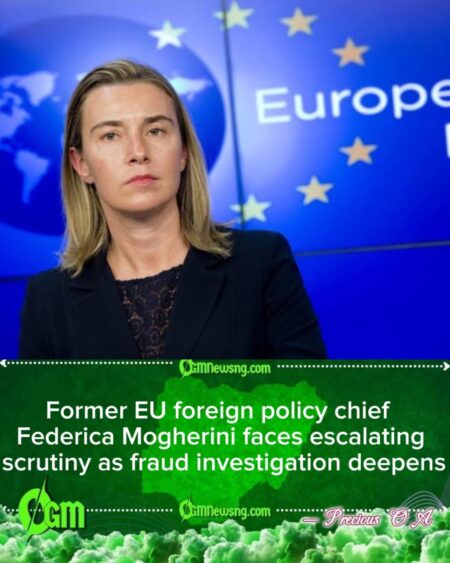
Former EU foreign policy chief Federica Mogherini was taken into custody following a sweeping investigation that purportedly uncovered extensive procedural irregularities in her financial declarations, prompting authorities to initiate formal fraud proceedings amid widespread public attention. The arrest, which unfolded after weeks of private deliberations among investigative agencies, immediately set off a chain reaction of political speculation throughout major European capitals. As legal officers prepared their preliminary reports, commentators noted that the scale and detail of the alleged misconduct suggested deeper systemic issues that would likely dominate institutional conversations for months to come.
Federica Mogherini reportedly faced a lengthy interrogation concerning her tenure in office, with investigators scrutinizing the financial frameworks she supervised and probing whether systemic weaknesses were exploited under her leadership. During this highly controlled session, officials allegedly presented her with a series of complex documents, cross-referenced files, and detailed expense audits, all of which demanded extensive clarification. The intensity of the interrogation raised broader questions about administrative decision-making across her term, leading observers to wonder whether previously overlooked patterns of procedural mismanagement might now re-emerge in public discourse.
Federica Mogherini was subsequently transferred to a holding facility while legal teams prepared substantial documentation that could shape the trajectory of the upcoming judicial process, creating a tense atmosphere across diplomatic networks. Her relocation was reportedly executed under strict security protocols, reflecting the gravity with which the authorities viewed the unfolding situation. Meanwhile, foreign policy officials scrambled to assess how her sudden detainment might intersect with delicate geopolitical engagements, particularly those relying on her institutional experience and long-standing relationships with international partners.
INVESTIGATIVE FINDINGS AND DOCUMENTED IRREGULARITIES
Federica Mogherini became a central figure in a developing inquiry that highlighted discrepancies in administrative authorization procedures, raising questions about the structures used to validate financial claims within EU foreign policy operations. Investigators, after revisiting multiple layers of archived records, suggested that the inconsistencies appeared not only in isolated cases but in recurring formats that hinted at broader procedural lapses. These observations triggered renewed calls for a comprehensive review of the approval channels that governed high-level expenditures.
Additional reports circulated describing how internal audit teams uncovered anomalies in expense documentation, engaging multiple departments in a coordinated effort to unravel the complex networks tied to the allegations. Experts analyzing the material indicated that many of the financial entries appeared inconsistent with standard reporting practices, forcing auditors to undertake laborious reconciliations. As more irregularities surfaced, the scope of the investigation expanded, drawing in analysts specializing in budget interpretation and regulatory enforcement.
Various analysts argued that the emerging patterns suggested deeper institutional vulnerabilities, encouraging renewed debate over compliance practices and oversight mechanisms across major European institutions. Observers emphasized that large bureaucratic frameworks often allow subtle irregularities to go unnoticed for extended periods, and the Mogherini case now served as a vivid example of these structural blind spots. In policy circles, conversations intensified around whether independent auditing bodies should be granted expanded jurisdiction to prevent similar issues in the future.
POLITICAL FALLOUT ACROSS EUROPE
Federica Mogherini prompted a wave of political reaction as lawmakers debated the broader implications of the arrest, with several parliamentary blocs calling for emergency reviews of ethical codes within high-ranking offices. Public statements issued by representatives across different political spectrums suggested that the matter had already evolved into a symbol of institutional fragility. Some leaders insisted that the crisis represented a long-overdue opportunity to revisit long-standing questions about conflict-of-interest rules and transparency requirements.
Concerned observers emphasized that the unfolding situation might trigger further interrogation of long-standing diplomatic structures, potentially circulating renewed demands for transparency and accountability. Numerous political analysts contended that high-profile cases such as this often serve as catalysts for sweeping reforms, frequently exposing gaps in administrative procedures that require immediate redress. As public debates intensified, advocacy groups renewed their insistence on strengthened monitoring systems designed to prevent regulatory breaches.
Statements from political allies suggested an atmosphere of uncertainty as officials evaluated the possible repercussions for ongoing international negotiations and cross-border policy initiatives. Some insiders hinted that key diplomatic missions may face temporary disruptions, given Mogherini’s previous role in mediating strategic agreements. Others warned that the heightened scrutiny could overshadow sensitive diplomatic milestones, prompting countries to proceed cautiously in their interactions with EU representatives.
LEGAL ARGUMENTS AND DEFENSE STRATEGY
Federica Mogherini instructed her legal representatives to pursue an assertive defense, positioning the allegations as misinterpretations of procedural practices rather than indicators of intentional deception. Her legal advisers reportedly prepared a detailed narrative aimed at demonstrating the complexities of foreign policy administration, arguing that many disputed entries reflected ambiguous regulatory language rather than deliberate misconduct. This strategy signaled a lengthy courtroom battle in which technical definitions may hold significant power.
Representatives close to the defense claimed that incomplete audits and administrative miscommunication may have contributed to the apparent discrepancies, framing the issue as a structural misunderstanding requiring judicial clarification. They asserted that numerous authorization procedures involve multi-tiered signatories and overlapping responsibilities, which can easily result in documentation distortions without any intentional wrongdoing. These assertions sought to redirect the focus from personal culpability to systemic ambiguity.
Legal commentators predicted that the upcoming hearings would highlight contested interpretations of regulatory frameworks, drawing significant attention to the complexities of policy administration. Many anticipate that expert witnesses will be called upon to dissect unfamiliar procedural codes and bureaucratic conventions, thereby prolonging the proceedings. Additionally, analysts warned that the case might reveal longstanding operational inefficiencies in regulatory enforcement, potentially leading to further institutional introspection.
INTERNATIONAL RESPONSE AND DIPLOMATIC REACTIONS
Federica Mogherini sparked global commentary as foreign governments reacted cautiously, evaluating whether the arrest might influence ongoing diplomatic dialogues and long-standing alliances. Officials from multiple regions refrained from issuing definitive statements, instead opting for measured language that acknowledged the seriousness of the allegations without undermining diplomatic neutrality. This restrained tone reflected widespread concern over preserving delicate negotiations in various geopolitical hotspots.
Several international organizations released measured statements urging preservation of due process, emphasizing the importance of maintaining stability in multilateral negotiations despite the growing controversy. Their messages underscored the principle that high-profile arrests should not derail collaborative efforts addressing humanitarian, economic, and security challenges. By advocating procedural fairness, these bodies signaled a desire to avoid geopolitical turbulence triggered by internal EU controversies.
Diplomats privately circulated the view that the arrest might introduce new uncertainties into collaborative efforts, particularly in regions reliant on sustained EU partnership networks. Some officials speculated that delays in policy implementation could ripple across joint programs, causing confusion among partner states. Others noted that the reputation of European diplomatic institutions may temporarily suffer, potentially complicating future engagements requiring high degrees of trust.
IMPLICATIONS FOR THE FUTURE OF EU GOVERNANCE
Federica Mogherini triggered renewed debate over institutional reform, with governance experts suggesting that her arrest could accelerate efforts to reinforce accountability systems within the EU. Several reform advocates argued that the incident revealed inadequacies in monitoring tools designed to detect irregularities early. This, they claimed, may lead to pressure for deeper structural overhauls affecting both financial and administrative procedures across the bloc.
Policy analysts argued that the scandal may redefine public expectations surrounding transparency, potentially reshaping the protocols used to monitor the conduct of senior officials. There is growing speculation that parliamentary committees may adopt more rigorous reporting mandates and broaden oversight authority in response. The heightened attention to integrity issues could shift political priorities and influence legislative agendas for years.
Reform advocates asserted that the incident could serve as a pivotal turning point, prompting policymakers to adopt stricter standards aimed at restoring confidence in administrative leadership. Some propose establishing independent regulatory boards with expanded investigatory power, while others recommend implementing mandatory periodic audits. Whichever approach gains traction, it is evident that the consequences of the Mogherini case will resonate throughout future governance conversations.
Table of Contents
Discover more from OGM News NG
Subscribe to get the latest posts sent to your email.