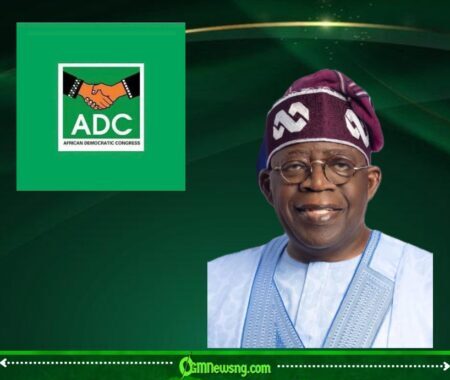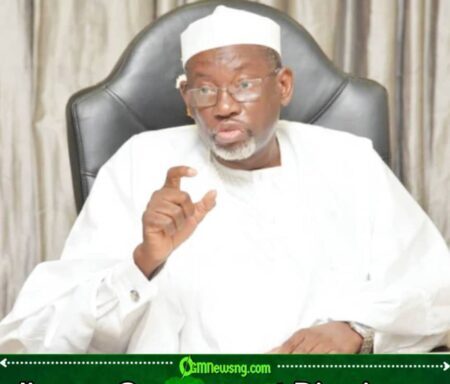






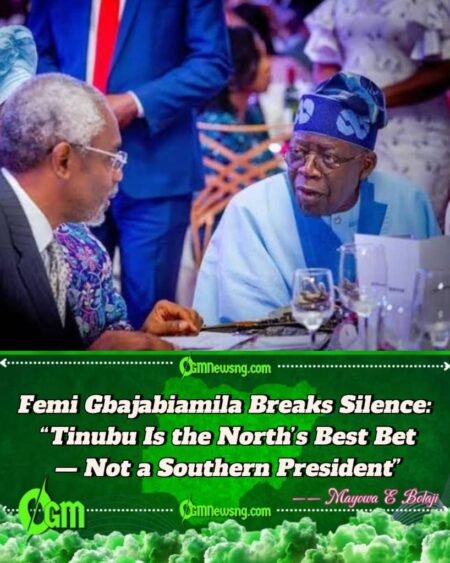
Femi Gbajabiamila, Chief of Staff to President Bola Tinubu, set off a wave of political reactions as he publicly urged Northern political heavyweights to throw their weight behind Tinubu’s second-term bid in 2027. Speaking at the 2025 Dialogue Session of the Northern Caucus of the National Forum of Former Legislators in Abuja, Gbajabiamila emphasized that Nigeria is in the middle of “a long overdue national reengineering project” which only Tinubu is equipped to complete.
“We are laying solid foundations today, and it is only right that the President is allowed to finish what he started,” Gbajabiamila declared, appealing to both emotional and strategic instincts of the Northern elite. He stressed that history would not be kind to those who abort a vision mid-flight simply for political gain or regional entitlement.
Northern Power Brokers in a Dilemma: Loyalty or Legacy?
Femi Gbajabiamila’s remarks placed Northern leaders at a critical crossroads: maintain traditional regional alliances or embrace a national agenda with President Tinubu at the helm. He acknowledged the North’s influential role in shaping Nigeria’s political future but warned that any decision made in 2026 must be rooted in continuity, not convenience.
While some Northern lawmakers nodded in agreement, others reportedly viewed the appeal with skepticism, citing historical imbalances and fears of marginalization. Gbajabiamila, however, assured the forum that Tinubu’s government has already rebalanced the scales of inclusion—especially with landmark projects and policy reforms impacting Northern states.
Tinubu’s “National Leadership” Framing Draws Mixed Reactions
Femi Gbajabiamila sought to redefine President Tinubu’s public image during his speech, insisting the president should not be seen through an ethnic or regional lens. “President Tinubu is not just a Southern leader; he is a national leader who has carried every region along,” he said, citing Northern-centric infrastructure upgrades, agricultural interventions, and education reform programs.
This framing, however, has not gone unchallenged. Critics argue that while the administration has indeed invested in the North, other regions like the South-East and Middle Belt still feel alienated. Gbajabiamila countered such narratives by asserting that national development is a long-term, rotating dividend—not a one-off cashout.
2027 Election Arithmetic: Will North Play Kingmaker or Challenger?
The implications of Femi Gbajabiamila’s statement extend beyond simple rhetoric; it’s a strategic appeal to consolidate power ahead of a contentious 2027 electoral cycle. “It is not enough to start a good thing—we must finish it,” he emphasized, urging the North to avoid being pawns in political chess games that serve no long-term purpose.
Political analysts view Gbajabiamila’s speech as a direct counter to whispers of Northern ambition to reclaim the presidency. With several Northern governors and ex-legislators reportedly interested in running, the call for a united front behind Tinubu could either solidify APC’s dominance or splinter it entirely.
Calls for Equity vs. Rotational Presidency: The Debate Deepens
Femi Gbajabiamila subtly challenged the unwritten rule of power rotation by emphasizing merit, consistency, and vision over zonal entitlement. “Equity is not about turns; it is about doing what’s right for the nation when it matters most,” he asserted. This has reignited debate on whether Nigeria should prioritize zoning or competency in leadership selection.
Critics within and outside the APC have called Femi Gbajabiamila’s comments “tone-deaf” to Nigeria’s ethnic sensitivities. However, his backers insist that zoning alone cannot guarantee effective governance—pointing to President Tinubu’s reform agenda as a rare window for irreversible national transformation.
Unity or Uprising? Northern Youth Groups React Swiftly
The Northern political elite were not the only ones stirred by Femi Gbajabiamila’s remarks. Several youth-based organizations across Kano, Kaduna, and Bauchi released joint statements either condemning or cautiously endorsing his call. While groups like the Arewa Youth Coalition criticized the message as “a Southern script masked as unity,” others applauded the recognition of Northern contributions and benefits under Tinubu.
Femi Gbajabiamila responded by urging Northern youths to “look beyond tribal lenses” and assess national progress through measurable indices. He reiterated that the real enemy of the region is not who sits in Aso Rock, but the systemic poverty and educational decline that no administration—until now—has taken seriously.
Table of Contents
Discover more from OGM News NG
Subscribe to get the latest posts sent to your email.