









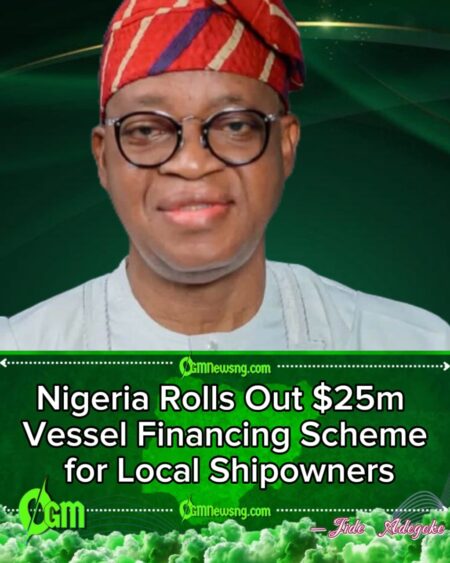
The Federal Government has unveiled a $25 million vessel financing scheme aimed at strengthening Nigeria’s indigenous shipping sector and reducing the dominance of foreign operators in the nation’s maritime industry. The initiative, announced by the Ministry of Marine and Blue Economy in collaboration with the Nigerian Maritime Administration and Safety Agency (NIMASA), is designed to improve access to affordable capital for local shipowners and operators.
The scheme is part of a broader strategy to reposition Nigeria as a major maritime hub in West and Central Africa, enhance local participation in shipping, and retain freight earnings within the national economy. Officials said the fund would be disbursed through selected financial institutions under clearly defined eligibility and repayment frameworks to ensure sustainability and accountability.
Strengthening Local Shipping Capacity
Speaking at the unveiling ceremony, the Minister of Marine and Blue Economy under the train of the Federal government emphasized that the $25 million fund is intended to address one of the biggest challenges facing indigenous shipowners: limited access to long-term, low-interest financing. He noted that many Nigerian operators struggle to acquire or maintain modern vessels due to high commercial lending rates and stringent collateral requirements.
According to the minister, the new financing window will enable qualified Nigerian companies to purchase vessels, upgrade existing fleets, and improve operational standards in line with international best practices. He added that this would enhance safety, efficiency, and competitiveness across coastal and inland waterways.
The Federal Government huge Industry stakeholders to welcomed the move, describing it as a long-overdue intervention. Representatives of indigenous shipping associations said the fund could help reverse years of decline in local fleet ownership and encourage young entrepreneurs to invest in maritime transport and logistics.
Economic Impact and Job Creation
Officials explained that the vessel financing scheme is expected to generate significant economic benefits beyond the maritime sector. By empowering local operators, the federal government aims to reduce capital flight associated with foreign-dominated shipping services and increase Nigeria’s share of freight revenue from crude oil, refined petroleum products, and general cargo.
The Director-General of NIMASA stated that the initiative would also stimulate job creation in shipbuilding, repairs, port services, and maritime training institutions. He stressed that improved access to vessels would expand coastal trade, support fisheries, and enhance connectivity between riverine and coastal communities.
Analysts noted that if well-managed, the scheme could contribute to broader economic diversification efforts and complement existing policies such as the Cabotage Act, which prioritizes Nigerian participation in domestic shipping. They, however, cautioned that transparency, strict monitoring, and professional fund management would be critical to achieving the programme’s objectives.
Federal Government Implementation Framework and Oversight
The Federal Government disclosed that the $25 million fund would be administered through designated commercial and development banks, with NIMASA providing technical oversight. Clear eligibility criteria, including proof of Nigerian ownership, operational viability, and compliance with maritime regulations, will guide the selection of beneficiaries.
Officials assured that an independent monitoring mechanism would be put in place to track disbursements, vessel acquisitions, and repayment performance. They also revealed plans to expand the fund in future phases, depending on demand and the success of the pilot programme.
Maritime experts urged the government to ensure that the scheme is insulated from political interference and that beneficiaries are selected strictly on merit.
They added that complementary investments in port infrastructure, maritime security, and regulatory efficiency would be necessary to maximize the long-term impact of the financing initiative.
Table of Contents
Discover more from OGM News NG
Subscribe to get the latest posts sent to your email.