







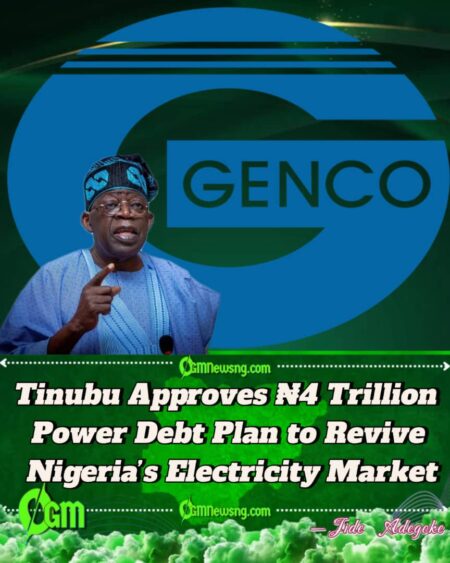
The Federal Government has taken a decisive step toward restoring investor confidence and financial stability in Nigeria’s electricity market with the finalization of the ₦4 trillion Presidential Power Sector Debt Reduction Plan. Approved by President Bola Ahmed Tinubu and endorsed by the Federal Executive Council (FEC), the initiative marks a bold and strategic effort to resolve the long-standing liquidity challenges that have crippled the nation’s power sector for over a decade.
For years, unpaid debts owed to power generation companies (GenCos) and gas suppliers have created a cash-flow crisis that undermined efficiency and discouraged new investment. Under the new plan, the Federal Government will clear verified arrears through the issuance of government-backed bonds, offering a structured and transparent approach to debt settlement. Officials say the move is not a bailout, but a fiscal reset designed to strengthen the financial foundation of the power industry.
According to the Ministry of Finance, this debt clearance is expected to free up liquidity within the sector, allowing operators to expand capacity, improve reliability, and attract fresh private capital. Analysts view it as a long-overdue solution to a systemic problem that has eroded trust and confidence between market players and the government.
Federal Government: GenCos Sign Agreement on Debt Settlement Framework
The development followed a high-level meeting in Abuja involving the Minister of Finance and Coordinating Minister of the Economy, Mr. Wale Edun; Minister of Power, Chief Bayo Adelabu; and the President’s Special Adviser on Energy, Mrs. Olu Verheijen, alongside top executives from power generation companies. During the meeting, both parties reached a consensus on a debt settlement framework that aligns government fiscal realities with the financial pressures facing GenCos and gas suppliers.
The agreement introduces a bilateral negotiation process to verify and reconcile outstanding debts transparently, ensuring that only validated claims are settled. Sources at the meeting confirmed that all stakeholders signed off on a “realistic and credible pathway” to clear the backlog, rebuild confidence, and prevent future accumulation of debts.
Prominent industry leaders have applauded the initiative. Tony Elumelu, Chairman of Transcorp Power, described the move as “the first credible and systematic effort to tackle liquidity issues from the root,” while Kola Adesina, Group Managing Director of Sahara Power, said the plan “sends a strong signal that reforms are finally being backed by decisive action.”
Federal Government’s Debt Plan Signals New Phase of Power Sector Reform
If properly implemented, the ₦4 trillion debt plan could mark the beginning of a genuine turnaround for Nigeria’s troubled electricity sector. Clearing verified debts will allow GenCos and gas suppliers to reinvest in production, upgrade infrastructure, and support broader grid modernization efforts. The ripple effects, analysts say, will extend to improved service delivery and more stable power supply for homes and businesses nationwide.
However, experts caution that execution and transparency remain critical. The government must maintain strict oversight of debt verification, publish settlement details, and ensure complementary reforms — such as cost-reflective tariffs, targeted subsidies, and improved metering systems — follow promptly. Without these, they warn, the sector could slide back into the same financial instability that has hindered progress for years.
Ultimately, the Presidential Power Sector Debt Reduction Plan represents more than a fiscal exercise; it is a reset button for Nigeria’s power sector. By matching political will with financial discipline, the Federal Government aims to restore credibility, attract long-term investment, and set the foundation for a sustainable, private sector-driven electricity market.
Table of Contents
Discover more from OGM News NG
Subscribe to get the latest posts sent to your email.