









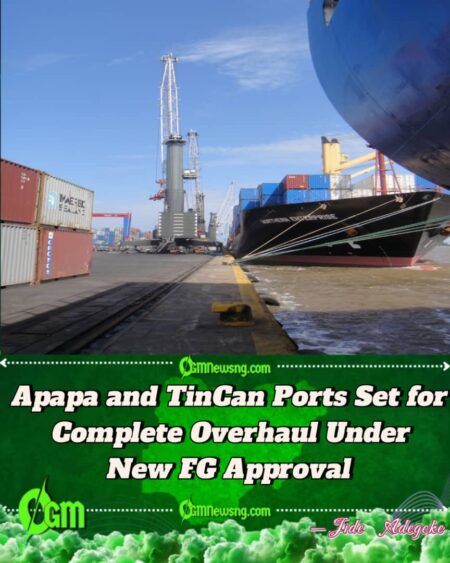
The Federal Government has approved $1 billion (₦1.4 trillion) for the comprehensive modernisation of the Apapa and TinCan Island Ports in Lagos, marking one of the largest infrastructure investments in Nigeria’s maritime sector in over two decades.
According to officials from the Federal Ministry of Marine and Blue Economy, the project aims to transform both ports into world-class maritime hubs capable of handling larger vessels, reducing congestion, and improving trade efficiency. The funding approval was reportedly granted during this week’s Federal Executive Council (FEC) meeting chaired by President Bola Ahmed Tinubu.
Federal Government Approves $1 Billion (₦1.4 Trillion) to Overhaul Nigeria’s Oldest Ports
Federal Government officials explained that the $1 billion package will cover complete infrastructural upgrades, including new quay walls, cargo-handling equipment, expanded container terminals, and digital automation systems. The investment also includes plans for dredging, drainage rehabilitation, and improved security architecture to curb cargo theft and illegal activities within port premises.
Minister of Marine and Blue Economy, Gboyega Oyetola, stated that the decision reflects the administration’s commitment to repositioning the ports as efficient gateways for trade. “This investment will eliminate the inefficiencies that have plagued Apapa and TinCan for years, strengthen Nigeria’s regional competitiveness, and support our drive for non-oil revenue growth,” he said.
The government expects the modernisation project to create over 10,000 direct and indirect jobs during its implementation phase, while significantly improving the turnaround time for cargo clearance and vessel handling.
Modernisation of Apapa and TinCan Island Ports to Redefine Nigeria’s Maritime Future
The modernisation of Apapa and TinCan Island Ports is expected to be executed through a Public-Private Partnership (PPP) model, ensuring transparency and sustainability. Preliminary reports suggest that major global port operators, including those from Europe and Asia, have expressed interest in participating in the upgrade.
Experts believe the initiative could save Nigeria billions of naira annually in logistics losses and demurrage fees, which currently hinder trade competitiveness. Maritime stakeholders also say the project could reposition Lagos as a key West African shipping hub, competing with major ports in Ghana, Côte d’Ivoire, and South Africa.
However, port users have urged the government to ensure that the modernisation process does not lead to temporary job losses or further disruption of business operations during construction. Stakeholders are also calling for environmental safeguards and transparent monitoring mechanisms to prevent cost
The Federal Government’s $1 billion approval for the Apapa and TinCan Island Ports modernisation represents a bold step toward overhauling Nigeria’s critical maritime infrastructure. If implemented effectively, it could boost economic productivity, attract foreign investment, and redefine the country’s trade landscape in the years ahead.
Table of Contents
Discover more from OGM News NG
Subscribe to get the latest posts sent to your email.