
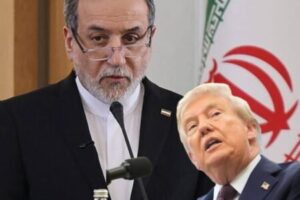

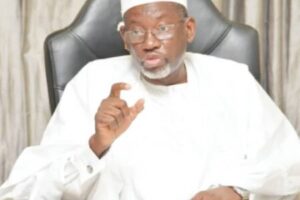


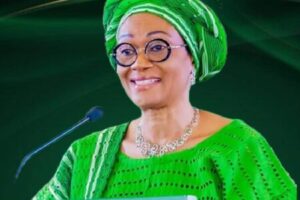
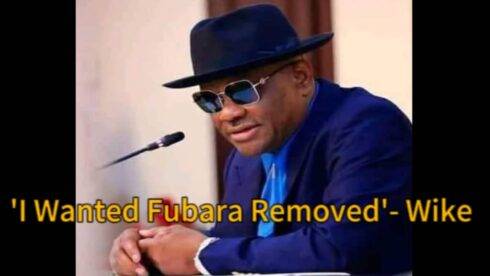
FCT Minister Nyesom Wike has publicly expressed dissatisfaction with the recent declaration of Emergency Rule in Rivers State, stating outright that he had preferred a complete removal of Governor Siminalayi Fubara. “As a politician, I am not happy with the declaration of Emergency Rule in Rivers State. I wanted the outright removal of the governor,” Wike declared during a press briefing that has since sent shockwaves across Nigeria’s political landscape. His statement lays bare the intensifying rift within the state’s political hierarchy and casts a spotlight on the enduring power struggle.
This declaration reaffirms Nyesom Wike’s longstanding grip over Rivers politics and hints at deeper fractures in the ruling PDP and the federal system. It also raises urgent constitutional and moral questions—was Emergency Rule a necessary compromise, or a move to preserve the image of a divided government? The fact that a serving federal minister has openly called for the removal of a sitting governor is virtually unprecedented in Nigeria’s Fourth Republic.
“The Governor Was Gone”: Nyesom Wike Accuses Fubara of Political Paralysis
Wike’s words suggest that, in his opinion, Governor Fubara had already lost control of governance before the president’s intervention. “The governor was gone; they should worship Mr. President. Every morning, they go to the president and say, ‘Can we wash your feet for saving us?’” Wike mocked. This sharp criticism underscores a deeper conflict: a perceived absence of leadership and competence within the Rivers State executive.
By painting Fubara as an already “defeated” governor, Nyesom Wike not only undermines the legitimacy of the Emergency Rule but also challenges the very authority of the state’s democratic mandate. It raises broader implications for Nigeria’s federalism—can a state truly govern itself if its leadership is considered “gone” by top-ranking national figures? And what precedent does this set for state-federal relations?
Presidency as Mediator: Tinubu’s Balancing Act Amid Political Crisis
Despite his strong personal stance, Wike conceded that President Bola Ahmed Tinubu acted rightly to prevent further chaos. “But for the interest of the state, the president did the right thing to prevent anarchy in the state,” he stated, indicating a reluctant acceptance of the president’s decision. This signals a complicated relationship between Wike and the presidency—one that blends cooperation with veiled frustration.
President Tinubu’s intervention, seen by many as a stabilizing force, has also drawn mixed reactions. Supporters hail it as a pragmatic solution to a potentially explosive situation, while critics argue that it emboldens political godfatherism and undermines democratic autonomy. The balancing act by the presidency now teeters between restoring order and inadvertently endorsing political interference.
Rivers State on Edge: Citizens React to Emergency Rule vs Removal Debate
The political earthquake triggered by Nyesom Wike’s comments has been felt across the streets of Port Harcourt and beyond. For many citizens of Rivers State, the minister’s revelations are both alarming and clarifying. “It shows us who really pulls the strings,” said one resident. “If the minister wanted him out, and he says the governor was already gone, then who really governs Rivers State?”
Civil society groups have condemned the rhetoric, calling it inflammatory and dangerous to the rule of law. Several have warned that normalizing such statements could plunge the state into deeper political turmoil, especially with legislative instability already plaguing the Rivers State House of Assembly. Others argue that Wike’s candor is a rare moment of truth-telling in Nigerian politics.
Political Loyalty and Godfatherism: Nyesom Wike’s Statement Stokes Old Wounds
Nyesom Wike’s insistence that the people of Rivers “worship” President Tinubu for intervening has reignited old debates about political loyalty, godfatherism, and the erosion of democratic ideals. Critics argue that this sort of fealty—likened to washing feet—is a metaphor for the patron-client dynamics that continue to dominate Nigerian governance.
This brand of politics, many analysts warn, leaves little room for genuine reform or performance-based governance. It fosters a culture where loyalty to powerful figures supersedes service to the electorate. Wike’s statement may be blunt, but it also accurately reflects the country’s political reality—a system where those who “save” others often demand submission rather than democratic accountability.
Legal and Constitutional Fallout: Can a Minister Demand a Governor’s Exit?
Legal experts are weighing in on the constitutional implications of Wike’s comments. While a minister may express political opinions, calling for the removal of a governor—especially in such definitive terms—may raise questions about federal overreach and abuse of power. “This isn’t just political talk; it borders on democratic erosion,” said constitutional lawyer Barr. Ifeanyi Odumeje.
Already, calls have intensified for the National Assembly and judicial authorities to investigate the circumstances surrounding the Emergency Rule and any undue political influence. If Nigeria is to avoid a future where federal might arbitrarily undermines state autonomy, analysts argue, a clear legal framework must be enforced. Otherwise, the thin line between order and authoritarianism may become irreversibly blurred.
Table of Contents
Discover more from OGM News NG
Subscribe to get the latest posts sent to your email.