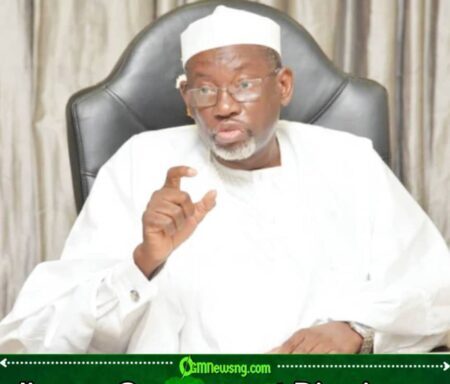









The Minister of Education, Dr. Tunji Alausa, has proposed a transition to a 12-year basic education model in Nigeria, replacing the existing 9-3-4 system. He made this proposal during the 2025 Extraordinary National Council of Education meeting in Abuja, which serves as the country’s highest education policy-making body.
Nigeria’s current system comprises nine years of basic education (six years of primary and three years of junior secondary), three years of senior secondary, and four years of tertiary education. However, Dr Tunji Alausa argued that this structure has limitations, particularly in ensuring students’ readiness for higher education. He asserted that shifting to a 12-year basic education model would improve learning continuity and align Nigeria’s system with global best practices.
Dr Tunji Alausa Justification for the 12-Year Basic Education Model
Dr. Tunji Alausa emphasized that while the 9-3-4 system has its advantages, it also presents significant challenges, including students’ struggle to transition smoothly to higher education. He explained that adopting a 12-year basic education structure would provide a seamless, uninterrupted learning experience, ensuring better standardization and quality assurance.
“A 12-year basic education model will ensure a continuous, uninterrupted curriculum, promoting better standardization and fostering quality assurance in the education system,” Dr Tunji Alausa stated. He further noted that a more structured and extended education system would enhance students’ cognitive and practical skills before they advance to tertiary institutions.
Additionally, Dr Alausa highlighted that this model would improve educational outcomes, producing graduates who are more equipped for Nigeria’s workforce and economic development. He linked the reform to a broader effort to elevate Nigeria’s education standards to international levels.
Technical Education and University Admission Age Policy Review
Beyond the proposed shift in the basic education model, Dr Tunji Alausa also addressed the importance of technical education in national development. He announced plans to convert federal science and technical colleges into federal technical colleges, emphasizing that technical education plays a crucial role in bridging skill gaps in the labor market.
“The provision of technical education allows a nation’s human and natural resources to be harnessed more effectively. Therefore, technical education contributes significantly to national development, driving cultural and industrial progress,” he said.
The minister also revisited Nigeria’s policy on university admission age, which currently sets the minimum entry age at 16. He argued that this policy has led to bright and talented students being unable to pursue tertiary education immediately after completing secondary school. He expressed concern that keeping these students idle could exacerbate mental health challenges.
“We are now preventing these students, after finishing secondary education at the age of 16, from attending university until they are 18. This delays their development and harms their future,” Dr Tunji Alausa remarked, suggesting that the council consider an adjustment.
Public Reactions: Concerns Over Policy Inconsistencies
Dr. Tunji Alausa’s proposal has sparked mixed reactions among Nigerians, particularly on social media. Many commentators expressed skepticism, questioning whether the new model would genuinely improve education or simply become another unfulfilled policy.
A social media user, Adnan (@AdnanX), criticized the focus on restructuring the education system rather than improving its quality. “No matter whether you’re running the 9-3-4 system or the 12-year basic education model, the real issue is the quality of learning. Europe and America focus on student outcomes, while Nigeria keeps lagging behind,” he tweeted.
Others, like Alhaji of Nupeland, argued that Nigeria’s main problem lies in teacher quality. “Any educational system in Nigeria that does not prioritize passionate and well-trained teachers will fail. We keep developing good curriculums without real impact,” he stated.
Similarly, another user, Jerry Research, pointed out the inconsistency in education policies. “That was how another minister introduced the 18-year minimum for university admission, and now it’s being changed again. What assurance do we have that the next minister won’t reverse this policy?” he questioned.
Meanwhile, Yommie (@YommieX) dismissed the 12-year basic education model as a superficial change, arguing that curriculum improvement and better teaching conditions should be the priority. “It’s the same thing. Whether 9-3-4 or 12-4, nothing changes unless we fix the curriculum, especially at the tertiary level,” he stated.
As discussions continue, the proposed 12-year education reform will likely face further scrutiny, with stakeholders debating its feasibility and long-term impact on Nigeria’s educational landscape.
Table of Contents
Discover more from OGM News NG
Subscribe to get the latest posts sent to your email.