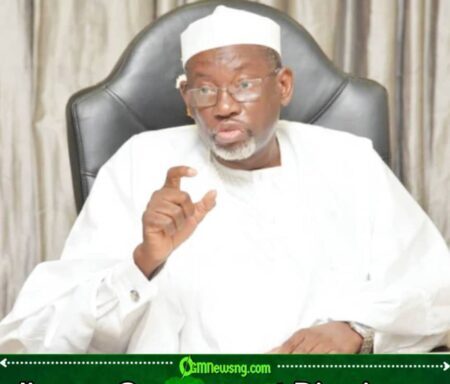






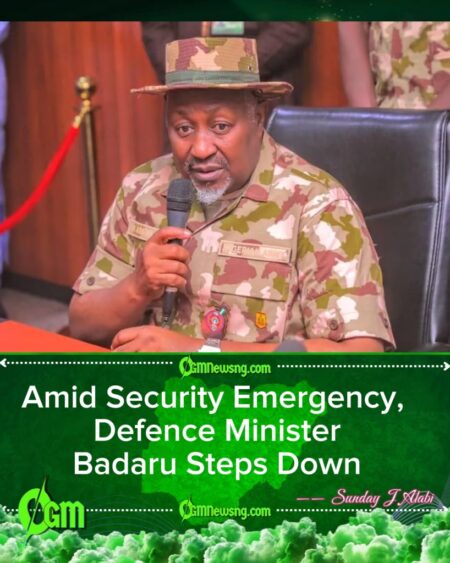
Nigeria’s Defence Minister, Alhaji Mohammed Badaru, has stepped down from office, citing health reasons in a resignation that comes at a critical moment in the nation’s security landscape. His decision, confirmed on Monday by the President’s Special Adviser on Information and Strategy, Bayo Onanuga, occurs as President Bola Tinubu declares a national security emergency and prepares to unveil its full scope in the coming days. Tinubu has accepted Badaru’s resignation and expressed appreciation for his service.
Badaru Resignation Confirmed as Health Concerns Take Priority
Badaru formally communicated his exit to President Tinubu through a resignation letter in which he attributed the decision to declining health. According to Onanuga’s statement, the President is expected to notify the Senate of a successor later this week.
The former minister, who governed Jigawa State for two terms between 2015 and 2023, was appointed Defence Minister on August 21, 2023. His 15-month tenure was marked by heightened security crises, including widespread banditry, insurgency, kidnapping, and growing public pressure for more decisive military action. Despite efforts to strengthen defence operations, his administration frequently faced scrutiny over gaps in strategy and response.
Badaru exits office at a time when federal authorities are rolling out a national security emergency designed to address the prolonged insecurity affecting several regions of the country.
Controversy Over BBC Interview and Public Backlash
The outgoing minister’s final weeks in office were overshadowed by criticism following his BBC Hausa Service interview, where he stated that certain terrorists could not be attacked due to the density of forest hideouts that limited the reach of military airstrikes. He noted, “It is true that their whereabouts are known, but they are people you cannot attack, or they are in the forests where our bombs cannot reach them.”
These comments triggered widespread backlash and raised questions about Nigeria’s military capabilities. The Opitanglobamedia Board described the remarks as “confusing, contradictory and self-deprecatory,” while observers argued that such statements could undermine public confidence and troop morale.
On Monday, The PUNCH published an editorial titled “Badaru is unfit, sack him,” describing his comments as “defeatist” and asserting that national security must not be undermined by political considerations. The editorial also suggested that future defence leadership should include individuals with military backgrounds to enhance strategic command.
Security Challenges Persist as New Appointment Looms
Badaru’s resignation adds another layer of uncertainty as Nigeria confronts persistent security challenges. Analysts continue to warn that leadership gaps, insufficient technological capability, and inadequate intelligence coordination hinder the nation’s counterterrorism and counter-banditry efforts.
Vice-President Kashim Shettima recently noted that terrorists have killed more than 100,000 Nigerians and displaced over two million, underscoring the gravity of the crisis. As the Federal Government advances a national security emergency, stakeholders expect stronger coordination, improved strategic planning, and more technologically driven military operations.
With the President set to announce Badaru’s replacement soon, public attention now turns to the calibre of leadership that will steer Nigeria’s defence sector during an increasingly volatile period.
Table of Contents
Discover more from OGM News NG
Subscribe to get the latest posts sent to your email.