









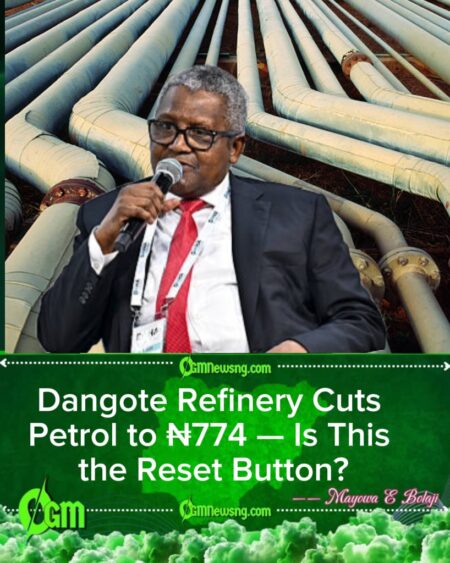
Dangote Refinery has officially announced a reduction in its petrol pump price to ₦774 per litre, a move that is already generating significant reactions across Nigeria’s energy sector. The Dangote Refinery petrol price reduction marks another strategic adjustment within the country’s evolving downstream petroleum market. Industry observers note that pricing decisions from Dangote Refinery often carry considerable influence due to the refinery’s production capacity and market position.
The new ₦774 per litre rate reflects ongoing market dynamics, including global crude oil price fluctuations, foreign exchange considerations, and domestic supply conditions. Analysts say the Dangote Refinery petrol price reduction could trigger competitive adjustments among fuel marketers and depot operators nationwide. As one of Africa’s largest refineries, Dangote plays a critical role in shaping fuel pricing trends in Nigeria.
Motorists and commercial transport operators have begun reacting to the development, with many describing the reduction as a modest but welcome relief. While the decrease may not dramatically alter overall living costs, the Dangote petrol price adjustment signals responsiveness to prevailing economic realities within the country.
Market Reactions Trail Dangote Refinery Petrol Price Reduction
The Dangote Refinery petrol price reduction has sparked widespread discussions among consumers, transport unions, and economic analysts. Many stakeholders believe that any downward review in petrol price carries both economic and psychological significance, especially in a fuel-dependent economy like Nigeria. The announcement has quickly dominated conversations at filling stations and across social media platforms.
Transport operators are cautiously optimistic that the Dangote Refinery adjustment could ease operational expenses, although some say broader cost factors still influence fare pricing. Economists argue that sustained reductions by Dangote may eventually contribute to stabilizing transportation and logistics costs, which in turn affect food prices and consumer goods nationwide.
However, some analysts emphasize that the long-term impact of the Dangote petrol price reduction will depend on consistency and broader macroeconomic stability. They note that exchange rate volatility, crude oil market trends, and distribution logistics remain significant determinants of pump prices across Nigeria’s downstream petroleum sector.
Economic Implications of Dangote Refinery’s Pricing Strategy
Energy experts suggest that the Dangote Refinery petrol price reduction could signal increased market competition and operational efficiency within Nigeria’s refining landscape. As local refining capacity strengthens, stakeholders anticipate reduced reliance on imported petroleum products, which historically exposed the country to external pricing shocks.
The Dangote continues to position itself as a key driver of domestic fuel supply, and its pricing decisions are closely monitored by regulators, independent marketers, and policy analysts. By reducing petrol to ₦774 per litre, Dangote Refinery reinforces its influence in shaping national energy conversations and downstream pricing benchmarks.
Ultimately, the Dangote petrol price reduction underscores the refinery’s strategic role in Nigeria’s economic framework. As fuel prices remain central to inflation, transportation, and overall cost of living, developments from Dangote will likely continue to command national attention in the weeks ahead.
Table of Contents
Discover more from OGM News NG
Subscribe to get the latest posts sent to your email.