




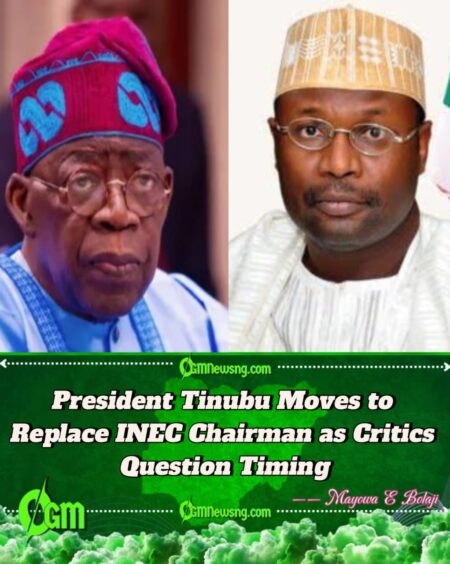
President Bola Ahmed Tinubu will be presiding over a pivotal Council of State meeting on Thursday, with expectations high that the session will address pressing matters of governance and electoral leadership. President Tinubu is reportedly set to present the names of potential candidates to succeed Professor Mahmud Yakubu, the current Chairman of the Independent National Electoral Commission (INEC), whose tenure is drawing attention as part of Nigeria’s democratic consolidation process. The selection of a new INEC Chairman is considered a crucial decision that will shape the integrity of future elections, particularly as the nation looks ahead to upcoming electoral cycles.
President Tinubu is said to be engaging stakeholders across political and institutional lines to ensure that whoever emerges as the new INEC Chairman commands the confidence of Nigerians and the political class. This is particularly vital at a time when electoral reforms and transparent processes are under increased public scrutiny. Nigerians are keenly watching the proceedings, mindful of how past controversies have often cast shadows over the electoral umpire’s credibility.
The Council of State meeting is expected to go beyond the INEC succession debate, with deliberations also covering economic stability, governance reforms, and national unity. As the highest advisory body to the President on state affairs, its discussions are often far-reaching, with implications for both immediate and long-term national policy directions.
President Tinubu and the Police Council Meeting on Security Matters
President Tinubu will also chair a separate Police Council meeting on Thursday, with a strong focus on security reforms and the question of state policing. The issue of decentralizing policing has remained at the forefront of national debates, as growing insecurity across Nigeria continues to challenge the capacity of centralized policing structures. President Tinubu has consistently emphasized the importance of strengthening security frameworks at the grassroots level, and the Council is expected to weigh proposals that could reshape the security architecture of the country.
President Tinubu is anticipated to guide discussions around key security objectives, including the operational efficiency of the Nigeria Police Force, coordination with state governments, and possible constitutional reforms needed to support new policing models. The meeting is also likely to address pressing matters such as banditry, terrorism, and urban crime, which have strained national security resources. These discussions are seen as critical to reassuring Nigerians of the government’s resolve to secure lives and property.
Stakeholders expect the Council’s deliberations to set the tone for broader legislative and policy actions on security. Should consensus emerge around state police, it would mark a significant turning point in Nigeria’s approach to policing, potentially enhancing accountability and community-based security operations.
President Tinubu to Consult with Council of State Members
President Tinubu will sit alongside an influential group of statesmen and leaders who make up the Council of State, reinforcing the gravity of the decisions to be made. The Council includes the President, who chairs the body, and the Vice-President, who serves as deputy chairman. Other members include all former Presidents and former Heads of the Government of the Federation, all former Chief Justices of Nigeria, the President of the Senate, the Speaker of the House of Representatives, all state governors, and the Minister of Justice and Attorney General of the Federation.
President Tinubu is expected to draw upon the diverse perspectives within the Council, as the body’s membership reflects Nigeria’s political, judicial, and federal leadership across generations. This breadth of representation makes the Council of State one of the most important advisory platforms in the country, especially when matters of electoral integrity and national security are on the table.
As Nigerians anticipate the outcomes of both the Council of State and the Police Council meetings, there is growing public interest in the level of consensus that can be reached. President Tinubu’s ability to navigate complex debates on INEC succession, security reforms, and governance challenges will be seen as a reflection of his leadership style and his administration’s readiness to deliver on national priorities.
Table of Contents
Discover more from OGM News NG
Subscribe to get the latest posts sent to your email.