







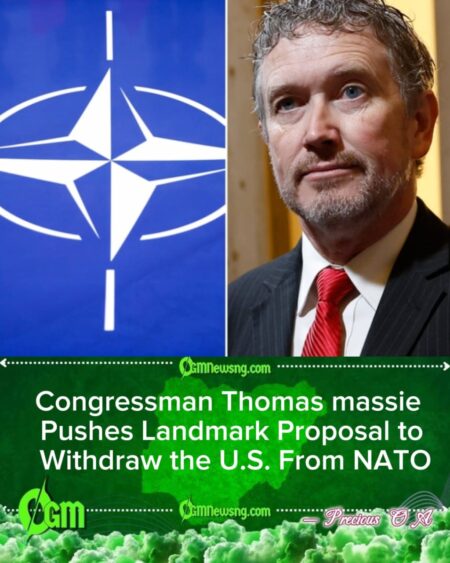
congressman Thomas massie introduced the controversial proposal for the United States to withdraw from the North Atlantic Treaty Organization, igniting immediate uproar across diplomatic, political, and national security communities nationwide. His announcement was met with a wave of commentary from analysts who described the move as both historic and deeply disruptive, underscoring the enormous implications such a shift would have for global power structures and longstanding commitments that have defined U.S. foreign policy since World War II.
Thomas massie followed the unveiling of his bill with a constructed and lengthy justification that stressed what he views as chronic inequities within the NATO framework. In his speeches, he underscored his belief that American taxpayers have borne the overwhelming economic and military burdens of the alliance for far too long, while several member nations fail to meet their agreed responsibilities. His comments reflected a broader argument that U.S. interests are being diluted by obligations to countries that do not reciprocate proportionally.
This development prompted widespread discourse among foreign policy scholars who argued that the proposal marks one of the most profound challenges to the alliance in generations. Analysts suggested that the debate now unfolding reflects deeper ideological divides about the purpose of American military power and whether alliances conceived in another century remain suitable for modern geopolitical complexities.
Debate Over U.S. National Security
Thomas massie argued with intensity that NATO’s strategic relevance has been steadily eroding due to its inability to adapt promptly to emerging threats. He insisted that cybersecurity warfare, artificial intelligence-driven conflict, and rapidly shifting global alliances demand new structures, not continued reliance on Cold War-era institutions. His remarks suggested that NATO has become cumbersome and insufficiently responsive to the realities of the twenty-first century.
Critics responded with full force, arguing that any withdrawal would represent a catastrophic blow to American national security. They maintained that NATO’s extensive intelligence-sharing networks, cooperative defense systems, and coordinated military operations serve as irreplaceable pillars of United States safety. These experts warned that adversarial nations would immediately sense opportunity in any sign of American retreat from alliance leadership.
Strategic analysts offered detailed assessments questioning whether withdrawal would actually free the United States from risk or simply expose the nation to new vulnerabilities. They indicated that NATO’s collective deterrence, even with imperfections, remains a stabilizing force in an increasingly fractious and unpredictable world.
International Diplomatic Implications
Thomas massie’s announcement sent diplomatic shockwaves throughout Europe, prompting quick and sometimes anxious responses from allied governments. European leaders issued formal statements expressing apprehension that even a discussion about withdrawal undermines collective defense commitments and introduces instability into regions already facing rising threats from authoritarian regimes.
Government officials across the Atlantic warned that Europe could be thrust into a period of intense insecurity without the assurance of American military backing. Their concerns emphasized that U.S. presence within NATO has long acted as a stabilizing anchor preventing aggression and maintaining balance among geopolitical rivals.
Thomas massie, however, remained unmoved by these reactions, arguing that Europe must take full responsibility for its own defense capabilities. He asserted that decades of overreliance on the United States have weakened Europe’s strategic autonomy and inhibited the development of robust, self-sufficient defense infrastructures.
Economic and Military Funding Concerns
Economic policy advisors weighed in forcefully, stating that America’s financial contributions to NATO represent a significant ongoing drain on the federal budget. They argued that military expenditures tied to alliance commitments could instead be directed toward pressing domestic priorities such as infrastructure modernization, healthcare expansion, or cutting-edge technological development within the U.S. military itself.
Thomas massie highlighted that NATO’s existing financial structure, in his view, encourages member nations to underinvest in their own defense while counting on American taxpayers to cover shortfalls. He insisted this arrangement creates a systemic imbalance that rewards fiscal irresponsibility abroad while placing undue hardship on American workers and families.
Thomas massie also claimed that U.S. armed forces are repeatedly stretched thin across the globe as they attempt to uphold multinational obligations. According to him, withdrawing from NATO would enable the military to consolidate resources, better manage troop rotations, and invest in systems that directly serve American national interests.
Political Fallout and Reactions at Home
Thomas massie’s bill triggered immediate division within Congress, with lawmakers offering sharply contrasting views depending on their ideological leanings and foreign policy philosophies. Supporters described the proposal as a courageous challenge to entrenched political norms, while opponents framed it as an imprudent and dangerous move that jeopardizes global stability.
Growing tensions quickly surfaced between party leaders, several of whom warned that such legislation sends a troubling message to allies and adversaries alike. These leaders argued that even discussing withdrawal erodes confidence in American commitments and may cause destabilizing diplomatic ripple effects.
Thomas massie defended his actions by stating that genuine patriotism demands questioning longstanding international arrangements. He asserted that blind loyalty to outdated systems does not constitute strength but instead prevents necessary reforms crucial for safeguarding American sovereignty.
Future Outlook and Strategic Consequences
Thomas massie acknowledged that his bill faces substantial political obstacles but maintained that the conversation it provokes is both necessary and overdue. He emphasized that raising fundamental questions about the nation’s role within multinational alliances represents a crucial step toward long-term strategic recalibration.
Growing pressure from think tanks and defense analysts suggests that the outcome of this debate may shape U.S. foreign policy for decades to come. These experts cautioned that whether or not the bill advances, its introduction signals a shifting landscape in which long-standing assumptions can no longer be taken for granted.
Thomas massie concluded that, regardless of the legislative fate of his proposal, the United States stands at a defining crossroads. He insisted that future generations will judge today’s leaders based on their willingness to confront entrenched systems and craft a foreign policy rooted in sovereignty, prudence, and national strength.
Table of Contents
Discover more from OGM News NG
Subscribe to get the latest posts sent to your email.