





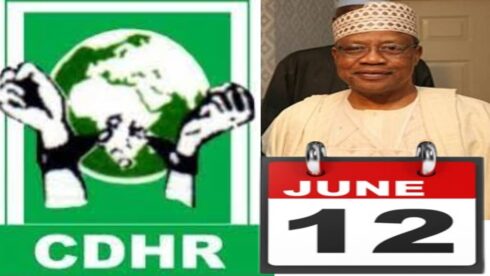
The Committee for the Defence of Human Rights (CDHR) has issued a fervent call for the prosecution of former military President, General Ibrahim Badamasi Babangida (IBB), over his role in the annulment of the June 12, 1993, presidential election. In a statement released on February 22, 2025, CDHR President Debo Adeniran described the annulment as an egregious assault on Nigeria’s democratic principles, leading to extensive political instability and human rights violations. Adeniran emphasized that Babangida’s recent admission of his involvement in the annulment is insufficient without corresponding legal accountability.
The CDHR contends that Babangida’s actions constitute crimes against humanity and a coup d’état against the Nigerian populace. The organization asserts that the annulment undermined the collective will of over 14 million Nigerians who participated in the election, widely regarded as the most transparent in the nation’s history. Adeniran stated, “This reckless, illegal, and unconstitutional action remains one of the gravest injustices inflicted upon the Nigerian people.”
Babangida’s Confession Sparks Renewed Outrage
In his recently published memoir, “A Journey in Service,” Babangida acknowledged that Chief Moshood Kashimawo Olawale (MKO) Abiola won the June 12 election. He admitted that the annulment was a significant misstep, describing it as “the most challenging moment of my life.” Babangida claimed that the decision was influenced by internal military pressures, particularly from forces led by then Chief of Defence Staff, General Sani Abacha.
Despite accepting responsibility, Babangida’s revelations have reignited public indignation. Many Nigerians view his statements as an attempt to deflect full accountability. Critics argue that acknowledging the error without facing legal consequences undermines the principles of justice and democracy. Human rights activist Omoyele Sowore emphasized that Babangida should face prosecution for his actions, stating, “It doesn’t matter when he is punished; IBB ought to be punished even if it is one day to his death.”
CDHR’s Call for Government Intervention
The CDHR has urged President Bola Ahmed Tinubu to initiate legal proceedings against Babangida. The organization believes that holding Babangida accountable is essential for national reconciliation and the restoration of public trust in Nigeria’s democratic institutions. Adeniran called on the President to “immediately order the prosecution of General Babangida for crimes against humanity and for orchestrating a coup d’état that subverted the democratic will of the Nigerian people.”
The human rights body also recommends the revocation of national honors awarded to individuals who supported or benefited from the annulment. This includes members of the Interim National Government and others who played roles in the subsequent military regimes. The CDHR asserts that such measures are necessary to deter future subversions of democratic processes and to affirm the nation’s commitment to justice and accountability.
Public Demand for Justice and Accountability
The annulment of the June 12 election has left enduring scars on Nigeria’s political landscape. Public figures and organizations continue to demand justice for the actions that led to the annulment. Senator Nicholas Tofowomo, a chieftain of the Peoples Democratic Party (PDP), has called for Babangida to offer a sincere public apology, stating that the annulment inflicted significant pain and setbacks on the nation.
Similarly, the Bola Tinubu Support Organisation (BTSO) has demanded a formal apology from Babangida, emphasizing that mere acknowledgment of the annulment is inadequate without genuine contrition and reparative actions. These calls reflect a broader sentiment among Nigerians that reconciliation requires both acknowledgment of wrongdoing and tangible steps toward redress.
Legal Perspectives on Prosecution
Legal experts have weighed in on the feasibility of prosecuting Babangida. Senior Advocate of Nigeria (SAN), Mike Ozekhome, has called on Nigerians to forgive Babangida, citing his public admission of regret as a significant step toward national healing. Ozekhome stated, “It takes a man with strong guts and balls… to publicly recant his earlier wrongful deeds and offer public apology to the entire nation.”
However, other legal practitioners argue that Babangida’s admission could serve as a basis for legal action. They contend that the annulment led to severe human rights violations, including arbitrary arrests and suppression of press freedom, which could be grounds for prosecution under both national and international law. The debate continues on whether forgiveness or legal accountability is the appropriate path toward national reconciliation.
Implications for Nigeria’s Democratic Future
The CDHR’s demand for Babangida’s prosecution underscores a critical moment in Nigeria’s journey toward democratic consolidation. Holding past leaders accountable for actions that undermined democratic processes is seen by many as essential to preventing future transgressions. The outcome of this demand could set a precedent for how Nigeria addresses historical injustices and reinforces the rule of law.
As the nation reflects on the events surrounding the June 12 annulment, there is a collective call for actions that honor the sacrifices made in the pursuit of democracy. Whether through legal proceedings, public apologies, or institutional reforms, the path chosen will significantly influence Nigeria’s democratic trajectory and its commitment to upholding the will of its people.
Table of Contents
Discover more from OGM News NG
Subscribe to get the latest posts sent to your email.