


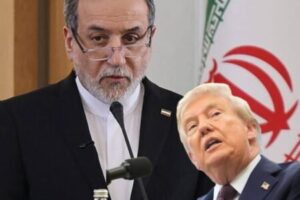




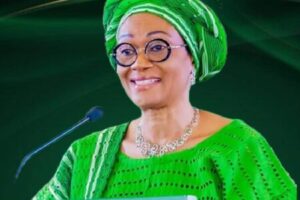


Minister of Solid Minerals Development, Dele Alake, has strongly criticized former Jigawa State governor, Sule Lamido, over his recent comments insinuating that President Bola Tinubu supported the annulment of the historic June 12, 1993, presidential election. Alake described Lamido’s statement as a blatant distortion of history, accusing him of suffering from “memory loss” and engaging in dangerous revisionism.
Speaking in defence of Bola Tinubu’s democratic credentials, Alake recounted a series of events that firmly placed the then-senator on the side of democracy. According to him, Tinubu not only actively supported the late MKO Abiola but also played a critical role in convincing former Vice President Atiku Abubakar to step down for Abiola during the Social Democratic Party (SDP) primaries. He further emphasized that Tinubu’s contributions continued even while he was imprisoned by the military regime, underscoring his unwavering commitment to the June 12 cause.
Tinubu Didn’t Run”—Alake Recalls Dangerous Days of Military Repression
In a passionate defence, Alake revisited the harrowing period following the annulment of the election, asserting that President Bola Tinubu was not a coward who fled but rather a prime target of the military regime. “If Tinubu was working for Abacha, how would he be escorting Abiola to meet Abacha for negotiations? How would he have been confronting Abacha to the point that a ‘dead or alive’ order was issued for his arrest?” Alake asked rhetorically.
He recalled how Tinubu was forced to escape Nigeria through the notorious “NADECO route” after it became evident that his life was in danger. According to Alake, this daring escape came only after the Abacha-led regime declared him a fugitive. Tinubu’s home was later bombed in retaliation, further proving his resistance to military rule.
Onanuga Sets the Record Straight: Bola Tinubu Was Never a Sellout
In a separate statement titled “Setting the Record Straight: President Bola Tinubu’s Role in the June 12 Struggle,” presidential aide Bayo Onanuga also challenged Lamido’s assertions, calling them false, reckless, and revisionist. He affirmed that Tinubu stood by democracy even when it became dangerous to do so, and rejected any notion that he or his late mother, Alhaja Abibatu Mogaji, supported the annulment.
According to Onanuga, Tinubu co-founded the National Democratic Coalition (NADECO), which became the leading platform against military dictatorship, and personally financed pro-democracy activities within and outside Nigeria. He also recounted Tinubu’s involvement in protests such as the blockade of the Third Mainland Bridge and secret senatorial sessions defying Abacha’s junta. “Tinubu, Ameh Ebute, and Abu Ibrahim were arrested and detained at Alagbon, yet they didn’t stop fighting,” Onanuga added.
The NADECO Years: Bola Tinubu’s Exile and Resistance
The presidency’s narrative underscores Bola Tinubu’s central role in the formation and sustenance of NADECO. After it became clear that Abacha had no intention of handing power back to Abiola, Tinubu and other NADECO members intensified their resistance. Tinubu continued to channel resources to activists in exile and within Nigeria, supporting both NADECO and Professor Wole Soyinka’s NALICON.
He eventually went into exile for nearly five years, during which time he became one of the most wanted men by the Abacha regime. Many exiled NADECO leaders, journalists, and civil rights figures have publicly acknowledged Tinubu’s financial and strategic support. The presidency noted that Tinubu’s democratic actions contrasted sharply with Lamido’s alleged collaboration with the same military forces he now seeks to distance himself from.
Presidency Warns Against Revisionism: “Envy Won’t Erase the Truth”
Alake and Onanuga concluded by urging Nigerians to resist attempts to revise the well-documented history of the June 12 struggle. They cautioned that figures like Lamido, now aligned with what they called the “Coalition of the Disgruntled,” are using misinformation as a political tool against the president. “Revisionism does not serve the cause of truth or our nation’s interests,” Onanuga stated.
The presidency warned that Lamido’s public remarks were not only misleading but also exposed him as suffering from what psychologists term the “tall poppy syndrome”—a resentment of those whose achievements overshadow others. “The facts remain clear,” Onanuga declared, “Tinubu was—and remains—a steadfast advocate for democracy, in contrast to Lamido and others who capitulated to military oppression.”
As debates around Nigeria’s democratic past resurface in today’s political battles, the legacy of June 12 remains a fiercely contested narrative—one that continues to shape the reputations and relevance of its key players.
Table of Contents
Discover more from OGM News NG
Subscribe to get the latest posts sent to your email.