









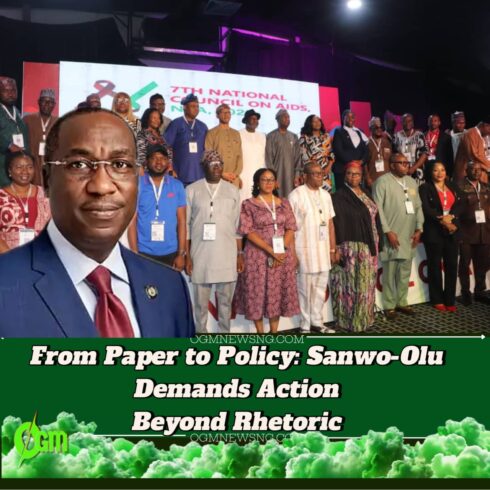
Babajide Sanwo-Olu, Governor of Lagos State, has issued a bold call to State Legislatures nationwide, demanding the urgent passage of protective HIV/AIDS legislation. Speaking through his deputy, Dr. Kadri Obafemi Hamzat, at the 7th National Council on AIDS, Sanwo-Olu emphasized the critical need for laws that ensure sustained funding, eliminate stigma, and protect the rights of persons living with HIV. He described the legislative inertia as a threat to national health security and social equity.
In a country where HIV-related stigma remains pervasive, Sanwo-Olu’s demand has sparked controversy among conservative blocs, but public health experts laud the urgency. The Governor’s stance reflects a shifting national health policy, pushing lawmakers to prioritize health equity. According to HIV statistics in Nigeria, over 1.9 million people live with the virus—yet legal protections remain fragmented and outdated.
QUARTERLY REVIEW MEETINGS: A NEW MATH IN NATIONAL HIV ACCOUNTABILITY
Babajide Sanwo-Olu has proposed the institutionalisation of quarterly inter-SACA (State Agencies for the Control of AIDS) review meetings to boost coordination, monitoring, and accountability in Nigeria’s HIV response. This move introduces a data-driven governance model, where state-level HIV programs are reviewed regularly, making the fight against HIV a measurable and adaptable national agenda.
This “math of accountability”—regular data aggregation, comparison, and policy adjustments—can change how Nigeria tracks HIV response outcomes. According to experts, frequent inter-state data evaluation could expose systemic inefficiencies and enhance funding distribution based on evidence. Sanwo-Olu’s model echoes WHO’s principle of “track, test, treat”, which thrives on timely, accurate, and transparent reporting.
HIV TRUST FUND: LAGOS LEADS IN DOMESTIC FINANCING STRATEGY
Sanwo-Olu announced that Lagos has already taken a major step with the creation of the Lagos State HIV Trust Fund, positioning the state as a trailblazer in domestic financing for HIV programs. He said this fund is a sustainable solution to the shrinking donor landscape, and it ensures that HIV care is not interrupted due to external funding volatility.
This approach contrasts starkly with most Nigerian states that still rely heavily on international donors. Experts argue that without strong financial independence, Nigeria risks regression in HIV control efforts. The Lagos model offers a blueprint for other states—one where health financing is localized, predictable, and designed to outlast political transitions and funding cycles.
REFORMING THE HIV ANTI-STIGMA LAW: A BATTLE FOR DIGNITY
Sanwo-Olu revealed that the Lagos State Government is reforming its HIV Anti-Stigma Law, a move intended to promote dignity, inclusion, and equal rights for those affected. He asserted that the current legal framework must be overhauled to align with modern human rights standards, insisting that people living with HIV deserve full societal participation without discrimination.
However, this reform proposal has generated resistance from some religious and cultural stakeholders who fear it could promote “immorality.” Still, civil rights advocates argue that such fears are morally unfounded and scientifically irrelevant. A reformed legal environment, they claim, is essential to improving treatment adherence and increasing voluntary testing—a proven method in reducing the HIV transmission rate.
CALLING FOR FEDERAL LEADERSHIP: HIV IS A NATIONAL EMERGENCY
According to Sanwo-Olu, the federal government must lead more decisively in the war against HIV, particularly by harmonizing national policies, funding frameworks, and community engagement efforts. He warned that a fragmented, state-by-state approach will not achieve epidemic control, urging Abuja to adopt a central coordinating role.
With $8 billion needed annually to sustain Nigeria’s HIV response, as highlighted by Hon. Amobi Ogah, Chairman of the House Committee on HIV/AIDS, federal oversight becomes non-negotiable. Sanwo-Olu’s call is seen as a direct challenge to federal complacency, pushing the presidency and federal ministries to recognize HIV as a national emergency, not just a health issue.
FROM PAPER TO POLICY: SANWO-OLU DEMANDS ACTION BEYOND RHETORIC
Sanwo-Olu concluded his speech by urging that the resolutions from the Council must move beyond paper declarations and be reflected in budgets, legislation, and tangible policies. He warned that if Nigeria continues with annual conferences without action, the HIV epidemic will outpace national response mechanisms.
This final call resonates with stakeholders who are fatigued by bureaucratic lip service, urging real-world impact through implementation. In mathematical terms, resolutions without implementation equal zero. Sanwo-Olu’s challenge: convert HIV council insights into strategic action plans that reach communities, save lives, and rebuild trust in public health governance.
Table of Contents
Discover more from OGM News NG
Subscribe to get the latest posts sent to your email.