


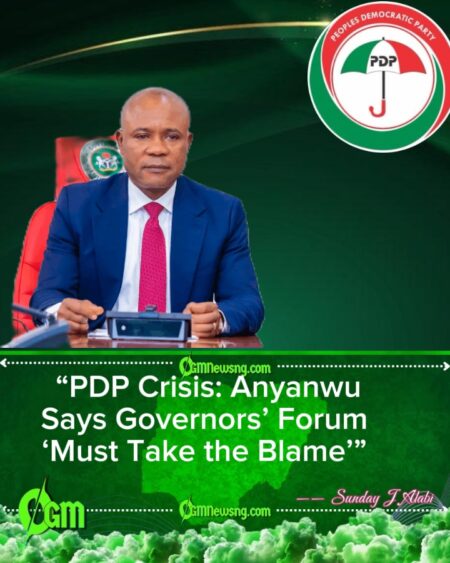
The expelled National Secretary of the Peoples Democratic Party (PDP), Senator Samuel Anyanwu, has accused governors elected on the party’s platform of being responsible for the crisis rocking the opposition party.
Speaking on Channels Television’s Politics Today on Monday, Anyanwu distanced himself from blame over the recent internal turmoil that culminated in the expulsion of several top members at the weekend. He insisted that the conduct and decisions of PDP governors had played a central role in destabilising the party.
Anyanwu, who has long been a prominent figure within the PDP, maintained that he had discharged his duties diligently during his time in office. According to him, some founding members of the party have already walked away in frustration, a development he linked directly to the actions and influence of the governors’ bloc in the party structure.
PDP Governors’ Forum Under Fire
In his televised interview, Senator Anyanwu was explicit in assigning responsibility to the PDP Governors’ Forum for the problems facing the party.
“The truth of the matter is that I will hold the Governors’ Forum responsible for whatever is happening to the party today,” he declared, suggesting that decisions taken by the governors, both individually and collectively, had weakened internal cohesion and trust.
Anyanwu’s comments reflect growing concerns over the perceived dominance of state chief executives in party affairs. Critics within the PDP have long argued that governors wield excessive control over party organs at both state and national levels, often influencing key decisions such as candidate selection, appointments, and zoning arrangements. This imbalance of power, they say, has alienated other stakeholders and created fertile ground for repeated internal conflicts.
The expulsion of several senior figures at the weekend has further exposed tensions and rivalries within the party. While the official reasons for the expulsions remain the subject of internal debate, Anyanwu’s remarks suggest he sees them as symptomatic of a broader crisis of leadership and inclusion fuelled by the governors’ grip on the party structure.
Anyanwu Defends His Record
Responding to questions on whether he had fulfilled his responsibilities as National Secretary in stabilising the PDP, Anyanwu firmly rejected suggestions of negligence or failure on his part.
“I did my part very well,” he said, stressing that he had worked within the limits of his office and the realities imposed by the power structure in the party. He implied that structural constraints and political interference, rather than personal shortcomings, contributed to the party’s current woes.
Anyanwu also pointed to the departure of some founding members of the PDP as a worrying sign. According to him, these early party leaders, who played key roles in establishing and nurturing the PDP, have become disillusioned with what they see as a departure from the party’s original ideals and internal democracy. Their exit, he suggested, is not just a personal decision but a damning verdict on the direction the party has taken in recent years.
The senator’s remarks highlight a recurring theme in Nigerian party politics: the struggle to balance the interests of powerful officeholders with the need for inclusive and democratic party management. As the PDP continues to grapple with internal disputes and leadership struggles, Anyanwu’s statements are likely to fuel further debate over how the party can reform its structures and rebuild unity.
Future of the PDP and Calls for Reform
The latest crisis adds to a series of internal battles that have dogged the PDP since it lost power at the federal level in 2015. Factional disputes, leadership tussles, and disagreements over zoning have repeatedly threatened the party’s stability and its ability to act as a coherent opposition force.
With Anyanwu publicly pointing fingers at the Governors’ Forum, the question now is whether the party can honestly confront these accusations and undertake meaningful reforms.
Key stakeholders are expected to intensify consultations in the coming weeks as the party assesses the impact of the recent expulsions and the widening cracks in its ranks. Party elders, members of the National Executive Committee, and other influential figures may be called upon to mediate and propose a framework for reconciliation that reduces the dominance of any single power bloc.
For the PDP, the stakes are high. As Nigeria moves closer to future electoral cycles, a divided opposition could struggle to present a united front against the ruling party. Anyanwu’s claims, whether accepted or rejected by other leaders, have once again brought to the fore the urgent need for internal reforms, clearer rules of engagement, and a more balanced distribution of influence within the party.
Table of Contents
Discover more from OGM News NG
Subscribe to get the latest posts sent to your email.