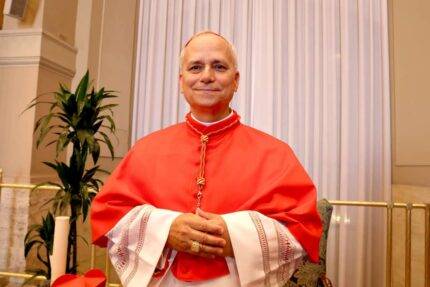
VATICAN CITY — In a momentous event for the Roman Catholic Church, Cardinal Robert Francis Prevost of the United States was elected on May 8, 2025, as the 267th pope, taking the name Pope Leo XIV. This election marks a historic milestone as Prevost becomes the first American-born pontiff in the Church’s nearly 2,000-year history. The announcement was delivered from the balcony of St. Peter’s Basilica with the traditional “Habemus Papam” declaration, as thousands gathered in St. Peter’s Square erupted in applause.
The conclave, comprising 133 cardinal electors, reached its decision after the fourth ballot. White smoke billowing from the chimney of the Sistine Chapel earlier signaled the successful election to the waiting faithful and international media. Pope Leo XIV succeeds Pope Francis, who passed away on April 21, 2025, leaving behind a legacy of outreach and reform. The new pontiff now inherits leadership of the 1.4 billion-strong Catholic Church at a time of global challenges and calls for continued reform.
The Man Behind the Name: Who Is Pope Leo XIV?
Born in Chicago, Illinois, Robert Prevost had long been considered a significant figure within the Church, serving as Prefect of the Dicastery for Bishops before his elevation to the papacy. Known for his pastoral approach and theological acumen, Prevost has been described as a centrist, balancing traditional Church teachings with a commitment to inclusion and social justice.
Like his predecessor, Pope Francis, Leo XIV has demonstrated compassion for marginalized communities, embracing causes such as the protection of migrants and advocacy for the poor. However, he maintains a conservative stance on key doctrinal issues, including opposition to the ordination of women as deacons. His leadership is expected to continue the trajectory of cautious reform while upholding core Church doctrines.
A Conclave of Consensus: The Process Behind the Selection
The conclave to elect Pope Leo XIV began on Wednesday afternoon, May 7, with the 133 eligible cardinals gathering in the Sistine Chapel. After prayers and a solemn vow of secrecy, the cardinals cast their initial votes, which yielded no consensus, as signaled by black smoke rising from the chapel chimney that evening. The process resumed Thursday morning, with two more ballots also resulting in inconclusive outcomes.
Finally, during the fourth round of voting, the cardinals coalesced around Cardinal Prevost as their choice. The election followed a familiar recent pattern, as modern conclaves tend to last only one or two days. This year’s conclave mirrored the brevity of Pope Francis’s own selection in 2013, contrasting with the protracted conclaves of earlier centuries, such as the nearly three-year election of Pope Gregory X in the 13th century.
A Symbolic Moment: Reaction to the Announcement
As the white smoke rose from the Sistine Chapel chimney just before noon in Rome, anticipation and speculation swirled among the crowd in St. Peter’s Square and viewers worldwide. Approximately an hour later, Cardinal Protodeacon Giovanni Battista Re stepped onto the balcony of St. Peter’s Basilica and proclaimed the words “Habemus Papam,” revealing Cardinal Prevost as Pope Leo XIV.
The announcement triggered a mixture of stunned silence and jubilant applause from the crowd, particularly among American pilgrims and tourists. “I never thought I would live to see an American pope,” said Maria Johnson, a Catholic from Boston who happened to be in Rome. “It’s a sign that the Church truly is universal.”
Challenges and Expectations: The Road Ahead for Pope Leo XIV
Pope Leo XIV assumes leadership at a time when the Catholic Church faces internal divisions, calls for greater transparency, and external pressures in a rapidly changing global landscape. With his background in pastoral ministry and Church governance, many observers expect him to prioritize dialogue and healing within a fractured Church.
He will also navigate complex issues such as declining vocations, clerical abuse scandals, and debates over the role of women and laity in the Church. As the first American pontiff, Leo XIV’s papacy carries symbolic weight, potentially signaling a broader inclusivity and global vision for the Catholic Church’s future. The world now watches as the new pope embarks on a journey to shepherd the faithful into a new era.
Table of Contents
Discover more from OGM News NG
Subscribe to get the latest posts sent to your email.