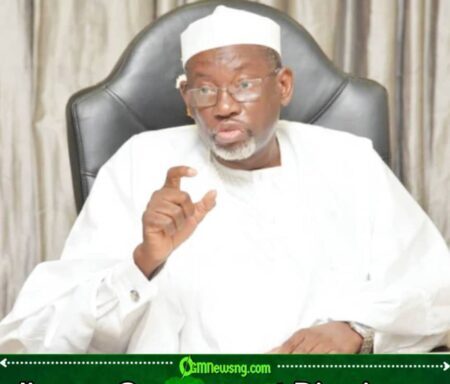







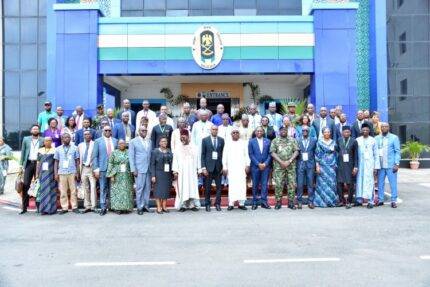
The Minister of Justice and Attorney General of the Federation, Prince Lateef Fagbemi, SAN, and the Chairman/Chief Executive Officer of the National Drug Law Enforcement Agency (NDLEA), Brig. Gen. Mohamed Buba Marwa (Rtd), have jointly affirmed that the recently amended NDLEA Act—currently awaiting presidential assent—will significantly enhance Nigeria’s ability to combat drug abuse and trafficking. The assurance was made on Wednesday, May 28, 2025, during the opening session of the Inter-Ministerial Committee on Drug Control (IMC) meeting in Abuja.
NDLEA Act Amendment: A Game-Changer in Drug Control
Speaking through the Director of Public Prosecution, Mr. Mohammed Abubakar, who represented him at the event, the Justice Minister said the Federal Ministry of Justice has worked collaboratively with the NDLEA to refine and bolster the nation’s legal framework for drug enforcement. According to Fagbemi, the revised Act is designed to significantly expand the institutional capabilities of the NDLEA, giving it stronger legal muscle to tackle drug-related crimes.
“In the past four years, we’ve seen unprecedented progress by the NDLEA in terms of arrests, convictions, and demand reduction interventions, particularly under the War Against Drug Abuse (WADA) campaign,” he noted. “This amendment will further strengthen our capacity to manage proceeds of crime and dismantle the financial empires behind drug trafficking networks.”
Fagbemi lauded the synergy between law enforcement agencies, state governments, and civil society organizations. He urged them to scale up drug prevention efforts, particularly among vulnerable populations such as youth, women, and the marginalized. “We must leave this meeting reinvigorated, with a renewed commitment to protecting our youth and building a healthier Nigeria,” he said.
Marwa: Progress Made, But the Fight Must Intensify
In his welcome address, NDLEA Chairman Brig. Gen. Mohamed Buba Marwa (Rtd) acknowledged that while funding constraints had impacted the full implementation of the National Drug Control Master Plan (NDCMP 2021–2025), the agency has remained undeterred. He described the amendment of the NDLEA Act as a pivotal development in the agency’s evolution.
“Despite financial limitations, we’ve stayed the course, committed to our goals,” Marwa declared. “The passage of the amended Act by the National Assembly is a major milestone. Once signed by the President, it will significantly boost our ability to tackle both supply and demand issues in Nigeria’s drug control landscape.”
Marwa called on all stakeholders present at the IMC meeting to redouble their efforts and inject new energy into their operations. He emphasized that confronting the complexities of Nigeria’s drug crisis requires unity, transparency, and a shared vision. “Let our voices, passion, and optimism lead the charge toward a drug-free Nigeria,” he urged.
Achievements Across Strategic Pillars: Arrests, Rehabilitations, and Awareness
Providing an update on major activities under the NDCMP’s four strategic pillars, Marwa highlighted several accomplishments recorded between 2023 and 2024. Under the Supply Reduction pillar, he disclosed that 31,334 drug offenders were arrested, with 6,839 convicted. The NDLEA also seized a staggering 4.3 million kilograms of assorted drugs and destroyed over 426 hectares of cannabis farms.
On the demand reduction front, Marwa said the agency provided counselling and rehabilitation to 19,033 individuals. The WADA campaign, he added, continued to gain traction across all tiers of government, delivering consistent awareness to communities on the dangers of drug abuse.
“Through WADA, we’ve empowered local leaders and influencers to become ambassadors of change,” he said. “This has created a sense of collective ownership in the national drug response, an essential ingredient for lasting success.”
UNODC: Nigeria Contributes 7.5% to Global Drug Use Disorder
Representing the United Nations Office on Drugs and Crime (UNODC) at the event, Dr. Akani Ibanga emphasized the urgency of Nigeria’s drug response efforts. He revealed that based on available data, at least three million Nigerians suffer from drug use disorder, amounting to 7.5% of the global total of 39.5 million.
“This figure is alarming and speaks to the magnitude of the challenge we face,” he said. “It is imperative that we fully implement the final phase of the NDCMP and align our actions with global best practices.”
Dr. Ibanga stressed the importance of a data-driven approach, noting that effective drug control strategies must be informed by evidence and tailored to Nigeria’s unique sociocultural context. He praised the NDLEA for its transparency in reporting and its commitment to both supply and demand reduction.
Calls for Renewed Commitment and Whole-of-Government Approach
Throughout the event, stakeholders echoed a common call: a renewed, united effort to confront the drug crisis in Nigeria. Fagbemi urged state governments to establish and empower local drug control committees, while Marwa called for deeper collaboration among federal agencies, civil society, and international partners.
The Inter-Ministerial Committee was praised for fostering a whole-of-government approach to drug control. As the NDLEA awaits the President’s assent to the amended Act, hopes are high that the new legal framework will serve as a turning point in the nation’s war against drug abuse and trafficking.
“Our vision is clear,” Marwa concluded. “A Nigeria where every community is resilient, every youth is protected, and the scourge of drugs is defeated. Together, we can and must achieve this.”
Table of Contents
Discover more from OGM News NG
Subscribe to get the latest posts sent to your email.