The African Democratic Congress (ADC) has called on President Bola Tinubu to accept the World Bank’s October 2025 report, which revealed that 139 million Nigerians now live below the poverty line. The ADC described the data as an “undeniable verdict” on what it termed the government’s failed economic policies and misplaced priorities.
According to the report, the number of Nigerians living in poverty has risen sharply from 81 million in 2019 to 139 million in 2025 — representing 61 percent of the country’s population. The World Bank attributed the surge to persistent inflation, unemployment, and declining real incomes that have eroded purchasing power among low- and middle-income households.
The Presidency, however, dismissed the figures as “unrealistic” and “out of context.” In a post on X (formerly Twitter), the Special Adviser to the President on Media and Public Communication, Sunday Dare, argued that the report’s data should be “properly contextualised” within the framework of global poverty assessment models. He maintained that Nigeria’s economic trajectory remains positive despite temporary setbacks.
ADC: Tinubu’s Policies Deepening Poverty, Not Reducing It
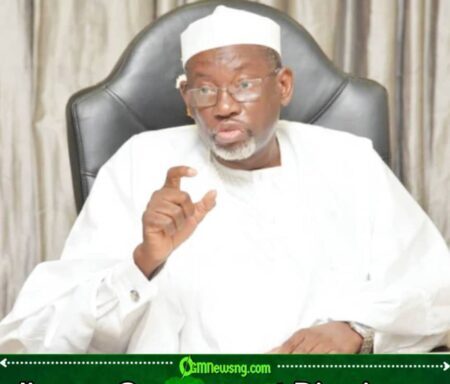
Reacting sharply to the Presidency’s rebuttal, the ADC said the government’s response exemplified its disconnect from the lived experiences of ordinary Nigerians. In a statement by its National Publicity Secretary, Bolaji Abdullahi, the party accused the All Progressives Congress (APC)-led administration of manipulating statistics to project a false image of progress.
“The World Bank numbers tell a simple but painful story: under the APC and President Bola Tinubu’s government, more Nigerians have fallen into poverty than at any other time in our history,” Abdullahi said. “In 2019, four out of ten Nigerians were poor. Today, it is six out of ten. The government’s propaganda cannot erase that fact.”
The ADC also criticised Tinubu’s Independence Day speech, describing it as a “calculated whitewash” meant to obscure the reality of growing hardship. The ADC painted a grim picture of daily life for many Nigerians, citing widespread hunger, children dropping out of school, and families selling assets just to afford basic food and medicines. It warned that nearly 30 million Nigerians have now joined the ranks of the “ultra-poor” — those who cannot meet minimal calorie requirements even if they spend all their earnings on food.
Call for Genuine Reforms and Pro-People Policies
The ADC urged the Tinubu administration to move beyond rhetoric and adopt policies focused on inclusive growth, food security, and job creation. It faulted the government’s reliance on self-congratulatory economic indicators, saying that while the administration celebrates “record revenue collection,” most citizens are becoming poorer.
“Food inflation has skyrocketed, with the price of a bag of rice multiplying five times in just four years. Poor families now spend 70 percent of their income on food, leaving little or nothing for rent, education, or healthcare,” the statement said. “The government’s social protection system has also collapsed — coverage has fallen from 20 percent in 2019 to just six percent in 2025.”
The ADC accused the government of manipulating domestic poverty thresholds to undercount poor citizens. “Nigeria’s poverty line of N137,000 per month, about $90, is far below the global benchmark. This deflated standard flatters the government but fails to reflect the true scale of suffering,” the ADC said.
It concluded by urging the government to accept the World Bank’s findings as an opportunity for reflection and reform, not denial. “Rather than defending propaganda, the government should focus on the 139 million Nigerians whose lives have been battered by its policies,” the statement added
Table of Contents
Discover more from OGM News NG
Subscribe to get the latest posts sent to your email.