


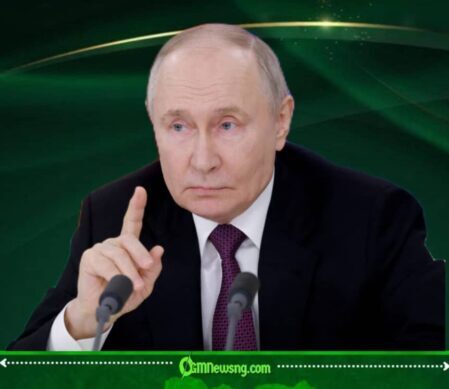
Russian President Vladimir Putin has accused countries that once dominated the global economy of attempting to frustrate the growth of emerging economies, warning that established economic powers are struggling to accept the changing balance of global influence. According to Putin, nations that previously occupied the commanding heights of international economic development are now resorting to different measures to preserve their former dominance, even as countries such as China, India, Brazil and other members of BRICS continue to expand their economic influence. Apparently, the global economic stage is becoming increasingly crowded, and some of its longest-serving occupants are not particularly enthusiastic about sharing the spotlight.
Speaking at the BRICS Business Forum in New Delhi on September 11, 2026, Putin described the transformation of the global economy as a significant structural shift. He argued that emerging economies were becoming increasingly important engines of global growth, while accusing established Western competitors of using questionable methods to recover their previous economic dominance. His comments have once again placed the rivalry between traditional economic powers and rising economies at the centre of international discussions.
Putin Says Established Economic Powers Are Resisting the Rise of New Competitors
Putin argued that countries which traditionally led global economic development were finding it increasingly difficult to accommodate the emergence of new economic centres. He suggested that some established powers were attempting to slow down their competitors rather than accept the changing realities of international trade, investment and economic cooperation. In his assessment, the global economy is gradually moving towards a more multipolar arrangement in which emerging nations have greater opportunities to influence international economic decisions.
The Russian president also pointed to the growing influence of BRICS, highlighting figures he presented showing that its member countries accounted for more than 40 per cent of global GDP over the preceding five years, compared with approximately 29 per cent for the G7. He further argued that BRICS contributed more than half of global economic growth during that period, while the G7 accounted for approximately 18 per cent. These figures formed part of his argument that economic influence is shifting, although the comparisons depend on the measurement period and economic methodology being used.
Putin’s Economic Warning Raises Questions About the Future of Global Competition
Putin’s criticism reflects a broader disagreement over the direction of the international economic system. For years, Western economies have maintained considerable influence through their financial institutions, technological industries, international trade networks and investment structures. However, the expanding economic activities of China, India and other emerging economies have increasingly challenged the traditional distribution of global economic influence. The question now is whether established powers will adapt to the changing environment or become increasingly defensive about their position.
Interestingly, Putin’s comments also come against the background of Russia’s own confrontation with Western countries over sanctions, financial restrictions and the war in Ukraine. His government has consistently presented closer BRICS cooperation and greater reliance on alternative trade and financial arrangements as ways of reducing dependence on Western-dominated systems. While his argument about economic competition deserves attention, his political position and Russia’s own interests should also be considered when evaluating his accusations. After all, in international politics, even economic arguments sometimes arrive with a geopolitical suitcase.
Ultimately, Putin’s remarks highlight an increasingly important debate about who gets to shape the future of the global economy. Whether his accusations accurately describe the intentions of established economic powers or reflect Moscow’s broader geopolitical perspective, the growing influence of emerging economies is an important development that cannot simply be dismissed. As competition between traditional economic leaders and rising economies intensifies, OGM News NG will continue to follow the developments and bring readers further updates on this unfolding global economic contest.
Table of Contents
Discover more from OGM News NG
Subscribe to get the latest posts sent to your email.