










Canadian Prime Minister Mark Carney has signalled that Canada could explore a major automotive partnership with Chinese manufacturers if ongoing trade negotiations with U.S. President Donald J. Trump fail to secure the future of Canada’s automobile industry. In a development that could further complicate relations between Washington and Ottawa, Carney says Canada will not sacrifice its domestic automotive sector simply to reach an agreement with its powerful neighbour. His remarks come amid growing trade tensions, American tariffs and uncertainty over the future of North America’s deeply interconnected automobile manufacturing industry. Apparently, Canada is beginning to consider what happens when its biggest trading partner makes cooperation increasingly difficult.
MARK CARNEY KEEPS CHINESE AUTOMAKERS ON THE TABLE AS TRUMP TRADE DISPUTE DEEPENS
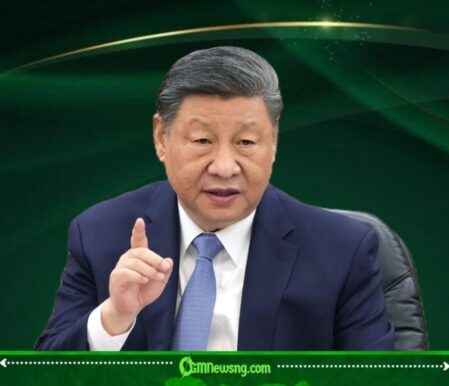
Speaking to reporters in Phnom Penh, Cambodia, ahead of an anticipated meeting with Chinese President Xi Jinping in Shenzhen, Mark Carney explained that negotiations with the United States remain his government’s priority. However, he made it clear that Canada is prepared to explore alternative partnerships with European, Chinese and Japanese automakers if Washington fails to preserve a viable North American automotive market. Carney argued that American trade policies have weakened the integration that previously allowed automobile manufacturers to operate efficiently across Canada, the United States and Mexico. His message was essentially that Canada would prefer to maintain its existing relationship with American manufacturers, but it would not sit around waiting for Washington to reconsider its trade policies.
When asked whether the possibility of Chinese investment was being used as leverage against the Trump administration, Mark Carney dismissed that interpretation with a rather pointed response: “It’s not leverage. But action, reaction.” He also explained that Canadian workers and manufacturing facilities must have opportunities to remain productive, even if the traditional North American arrangement becomes increasingly difficult. In other words, if Washington makes it difficult for Canadian factories to participate fully in the continental automobile market, Ottawa is prepared to find other partners. That could leave the Trump administration with an uncomfortable diplomatic question: what happens when a neighbouring country starts looking elsewhere for the business opportunities it once found in America?
MARK CARNEY SETS CONDITIONS FOR CHINESE INVESTMENT AS TRUMP FACES POTENTIAL AUTO INDUSTRY SHIFT
However, Mark Carney is not proposing to simply open Canada’s doors to Chinese manufacturers without conditions. He insists that any potential Chinese investment must involve substantial manufacturing operations within Canada, rather than facilities that merely assemble imported vehicle components. The proposed arrangement would also require appropriate labour standards, manufacturing infrastructure and gradually expanding domestic supply chains, including the use of Canada’s critical minerals in electric vehicle production. Carney wants genuine factories, employment opportunities and long-term industrial development, not just imported vehicles wearing a Canadian manufacturing disguise. Apparently, Ottawa wants the factories, the jobs and the economic benefits, not simply a parking lot filled with imported cars.
The possibility is not entirely new. In January 2026, Canada reached a preliminary trade arrangement with China that reduced the previous 100 per cent surtax on Chinese electric vehicles to 6.1 per cent, initially permitting an annual quota of 49,000 vehicles. In return, China agreed to reduce tariffs on Canadian agricultural exports, including canola. The agreement was expected to encourage Chinese joint-venture investment and create manufacturing opportunities, although it attracted criticism from Ontario Premier Doug Ford, who warned about potential threats to Canadian automotive employment and access to the American market. Meanwhile, Trump’s tariff policies have already disrupted the industry, with Stellantis facing criticism from Ottawa after shifting planned Jeep Compass production from Ontario to Illinois. The situation presents a rather awkward possibility: American trade pressure could encourage Canada to deepen its automotive relationship with a country Washington considers a major economic competitor.
For now, Mark Carney maintains that reaching a workable agreement with the United States remains the preferred outcome, and he has indicated that discussions with Trump and American officials are making progress despite significant disagreements. Nevertheless, his latest remarks suggest that Canada is no longer treating alternative automotive partnerships as distant possibilities. With an anticipated meeting with Xi Jinping approaching, the next phase of Canada’s relationship with China could become increasingly important to the future of its automobile industry. Whether Trump’s trade strategy ultimately protects American manufacturing interests or encourages Canada to explore new partnerships remains to be seen. Stay tuned to OGM News NG for further updates as this international trade drama develops.
Table of Contents
Discover more from OGM News NG
Subscribe to get the latest posts sent to your email.