









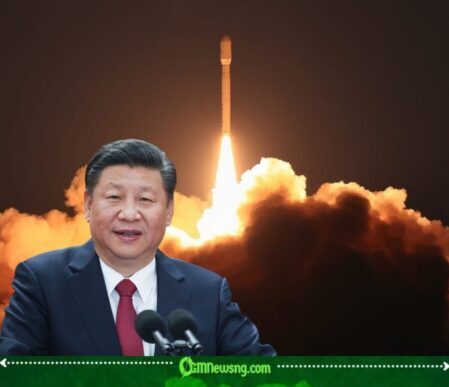
China has recorded another achievement in its growing space programme after successfully launching a Ceres-2 Y3 carrier rocket, which delivered four satellites into their designated orbit on November 7, 2026. The rocket lifted off at 7:37 a.m. Beijing time from the Jiuquan Satellite Launch Center in northwest China, marking a successful mission for its developer, the private aerospace company Galactic Energy. The satellites are intended to support ocean observation, weather monitoring, scientific research and other space-related activities. Apparently, China is increasingly determined to ensure that even the oceans and the atmosphere are not beyond its technological reach.
China’s Ceres-2 Rocket Delivers Four Satellites Into Orbit
The successful launch represents an important development for China’s commercial space industry, particularly for Galactic Energy, which developed the Ceres-2 rocket. The mission involved sending four satellites into their designated orbit, demonstrating the company’s continued efforts to develop and expand its commercial satellite-launching capabilities. The spacecraft are expected to contribute to different scientific and observational activities, although detailed technical information about each satellite has not been fully disclosed.
For China, the mission is about more than simply sending machines into space. Satellites designed for ocean observation and weather monitoring can provide valuable information about environmental conditions, atmospheric changes and activities across the Earth’s surface. Such information can support scientific research, forecasting and other applications. While ordinary citizens are busy checking weather applications before deciding whether to carry an umbrella, China is investing in technology that could help improve the information behind those forecasts.
China’s Growing Space Ambitions Receive Another Boost
The achievement is particularly noteworthy because the Ceres-2 programme previously experienced a setback during its first flight in January 2026, when the rocket failed to place its payload into orbit. Its successful November mission therefore represents a significant step forward for Galactic Energy and a demonstration of progress following that earlier disappointment. In the highly competitive space industry, a successful return after a failed attempt is an important milestone.
China’s expanding commercial space sector is also contributing to the country’s broader ambitions in satellite technology, scientific research and space exploration. However, the successful deployment of four satellites does not mean that every technical detail of the mission is already known. Their individual specifications, operational lifespans and precise capabilities remain areas requiring further clarification. For now, the successful launch gives China another reason to celebrate, while the rest of the world watches its space ambitions develop.
Table of Contents
Discover more from OGM News NG
Subscribe to get the latest posts sent to your email.