








Nigeria’s latest attempt to ease the financial pressure on federal workers has run into fresh resistance, with the Trade Union Congress of Nigeria (TUC) rejecting a proposed ₦70,000 monthly transport allowance and insisting that workers need a substantial salary increase rather than another temporary financial plaster. The proposal followed a meeting between the Federal Government and the leadership of the Nigeria Labour Congress (NLC) on Tuesday. Meanwhile, pensioners have raised their voices over their exclusion from the proposed six-month intervention scheduled to begin in November 2026, arguing that retirement should not mean being retired from government assistance.
In a country where transport fares, food prices and other essential expenses continue to squeeze household budgets, the disagreement raises a familiar question: should workers keep receiving temporary relief or should the government address the underlying problem of inadequate earnings? For the TUC, the answer is clear: a transport allowance may offer some breathing space, but it cannot replace a salary structure that allows workers to meet their basic needs.
TUC Demands ₦300,000 Pay, Says Temporary Relief Is Not Enough
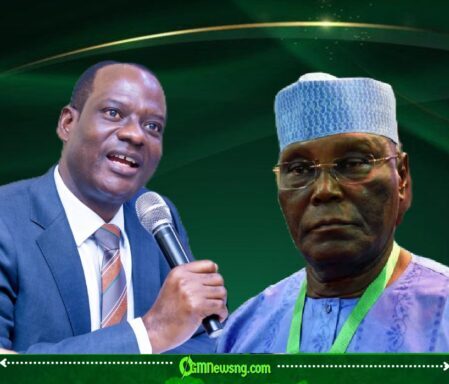
The TUC, through a statement jointly signed by its President-General, Festus Osifo, and Secretary, Nuhu Toro, argued that the Federal Government had the capacity to raise the salary of the lowest-paid worker to ₦300,000 from the current ₦70,000 minimum wage without waiting for another statutory minimum-wage review. The congress also called for the implementation of the Joint Health Sector Unions (JOHESU) agreement, stressing that economic hardship requires a more comprehensive response than a transport allowance.
The union maintained that workers were not asking for favours but demanding economic and social justice. In a pointed message to the authorities, it insisted that workers’ welfare must not be treated as a privilege and that agreements reached with organised labour must be honoured. In other words, the TUC wants the government to move beyond announcing financial relief and demonstrate that its promises can actually reach the people they are intended to help.
The congress also questioned the wisdom of returning to temporary wage awards when previous commitments had allegedly not been fully implemented. According to the TUC, the wage award agreed upon on October 2, 2023, was supposed to remain in place until a new minimum wage was agreed in 2024. However, it said some workers were still owed one or two months of payments, while others never received the award at all.
For workers who have already waited for promised payments, another announcement may sound less like reassurance and more like a request to exercise patience indefinitely. The TUC warned that temporary wage awards were neither sustainable nor far-reaching and said it would continue to defend workers’ rights, challenge non-compliance and pursue legitimate means of compelling the government to fulfil its obligations. It is awaiting the outcome of a scheduled meeting with the government before deciding its next course of action.
Pensioners Protest Exclusion as Cost-of-Living Pressure Continues
The Nigeria Union of Pensioners (NUP) has also criticised the proposed transport intervention, describing the exclusion of retirees as unjust. Its National President, Godwin Abumisi, said pensioners faced many of the same financial difficulties as serving workers, particularly when paying for transportation to hospitals, medical appointments, food markets and other essential destinations. For retirees surviving on inadequate pensions, the absence of additional support could make everyday expenses even more difficult to manage.
The pensioners also questioned why the NLC, while negotiating relief for serving workers, did not press for comparable assistance for retired colleagues. Their argument is straightforward: those who spent their productive years serving the country should not be treated as an afterthought once they leave the workforce. After decades of service, pensioners should not have to compete for recognition every time the government considers a new welfare package.
The NUP further criticised the Federal Government over the ₦25,000 monthly palliative promised under the October 2, 2023, Memorandum of Understanding with the NLC and TUC. According to the union, the commitment covered three months and was intended to support 15 million households, including vulnerable pensioners, with a total of ₦75,000 for each eligible beneficiary. The union’s complaint adds another layer to the controversy: beyond the question of who qualifies for new assistance, there is the question of whether previous promises have been fulfilled.
The dispute therefore extends beyond a single transport allowance. It touches on wage adequacy, the credibility of agreements between government and labour, the implementation of promised benefits and the treatment of retired public servants. While the proposed ₦70,000 intervention may provide temporary support to eligible serving workers, the TUC’s demand for higher pay and the NUP’s protest over exclusion show that organised labour remains dissatisfied with the wider response to the cost-of-living crisis.
As negotiations continue, the key issues to watch are whether the Federal Government will reconsider its proposed intervention, whether outstanding wage awards and palliative commitments will be addressed, and whether pensioners will receive corresponding relief. For now, the ₦70,000 proposal has become more than a transport allowance: it is a test of trust between the government, serving workers and retirees. Stay with OGM News NG for further updates as the labour dispute develops.
Table of Contents
Discover more from OGM News NG
Subscribe to get the latest posts sent to your email.