









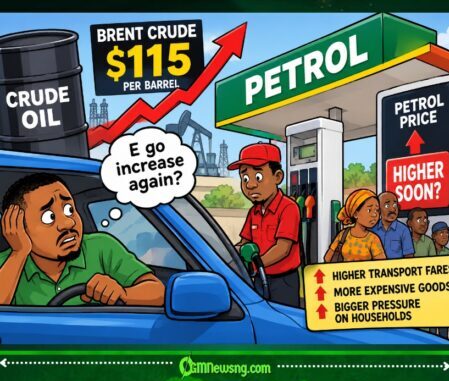
Nigerians wey still dey manage their transport money fit soon get another reason to hold their pocket tight, as international crude oil price don climb reach $115.18 per barrel on Friday, October 23, 2026. The increase don raise fresh fear say petrol price fit rise again for Nigeria, as tension for Middle East dey threaten global oil supply. But before motorists begin rush go filling station to buy fuel like say tomorrow no dey, make we examine wetin dey happen for international market and wetin e fit mean for ordinary Nigerians.
Petrol Price Under Pressure as Crude Oil Market Catch Fresh Fire
According to the material wey reach OGM News Pidgin, Brent crude oil, wey be one of the major international benchmarks for oil pricing, don climb reach $115.18 per barrel. The increase come as fear dey grow say renewed military strikes involving Iran fit happen again, with possible consequences for oil production, transportation and supply across the Middle East. For international oil market, even the fear say supply fit reduce sometimes dey enough to make prices jump, because traders dey react to wetin fit happen tomorrow, no be only wetin don happen today.
For Nigeria, the development dey raise concern because Dangote Petroleum Refinery and other depot owners don already dey sell petrol around ₦1,350 per litre for gantry level, according to the report. Gantry price na the wholesale price wey marketers pay to load petrol from refinery or depot; e no be the same thing as the final price wey motorists pay for filling station. Once the cost of replacing old stock with new petrol increase, marketers fit face pressure to adjust their selling price. In simple language, the petrol wey dem buy yesterday fit cost more to replace today, and na that difference fit bring another round of price wahala.
But make we no put cart before horse: the rise in crude oil price no automatically mean say another petrol price increase don happen. The information available no confirm any fresh general increase following the latest crude oil rally. Wetin dey happen na growing concern about possible future adjustment if the higher international prices continue to affect the cost of supplying petrol. So, before anybody begin announce new pump price for social media, make the person first confirm the actual market development. Fuel matter don already serious reach; no need to add fake alarm join am.
Middle East Tension and the Hidden Connection to Nigerian Petrol Price
The international situation get more layers beyond the price of crude oil itself. Concerns about renewed military action involving Iran, possible damage to energy infrastructure and insecurity around major shipping routes don increase fear of further disruption to global oil supply. On Thursday, October 22, Brent crude reportedly rise to $113.17 per barrel, its highest closing level since May 4, before the market continued to climb above $115 on Friday. These developments show how quickly geopolitical tension fit change the direction of the energy market.
One important place wey traders dey watch na the Strait of Hormuz, the narrow but strategically important waterway through which a significant share of global oil supply normally passes. If conflict disrupt shipping for the area, oil tankers fit face delays, while freight charges and insurance costs fit increase. Even when oil still dey underground or production never completely stop, the difficulty of moving am reach buyers fit make supply more expensive. Na so wahala wey start thousands of kilometres away fit eventually affect the amount wey Nigerian motorists pay to fill their tanks.
Nigeria own situation get another irony inside am. Even though the country dey produce crude oil and now get major domestic refining capacity through Dangote Refinery, local petrol prices never completely separate from international market movements. The price wey refiners and marketers fit charge still depend on factors such as crude procurement costs, exchange-rate exposure, refining expenses, transportation, product availability and competition. Domestic refining fit help with local supply, but e no automatically protect consumers from every international price shock.
For ordinary Nigerians, the concern no stop for petrol alone. If the price eventually rises, commercial drivers and transport operators fit review their fares to cover higher operating costs. Businesses wey depend on generators, delivery vehicles and road transportation fit also face higher expenses, and some of those costs fit eventually enter food prices and the price of other goods. However, the size and timing of any effect go depend on whether crude prices remain high, how local wholesale prices respond and whether marketers pass additional costs to consumers.
And na here the satire enter: international crude oil fit climb ladder for one side of the world, but na Nigerian worker wey dey calculate transport money for the other side fit begin sweat. If crude oil price rise again, everybody go begin monitor filling station like football fans wey dey wait for penalty kick. But the real matter no be only whether petrol go cost more; na how the country fit reduce the effect of these repeated shocks on ordinary people.
As things stand, Petrol Price remain under pressure, but another increase never become confirmed simply because Brent crude don reach $115.18 per barrel. Nigerians need accurate updates on wholesale prices, pump prices and international developments wey fit affect supply, while government and industry stakeholders need to pay attention to the wider cost-of-living consequences. If crude oil prices continue to rise and supply disruptions worsen, another adjustment fit become possible. For now, make motorists keep their eyes on verified market updates, because for this fuel matter, speculation fit spread faster than petrol itself.
Table of Contents
Discover more from OGM News NG
Subscribe to get the latest posts sent to your email.