








Electricity Act 2023 don return to the centre of Nigeria power-sector discussion as Vice President Kashim Shettima urge state governments to stop depending only on the Federal Government for solutions to local electricity problems. The message wey come from Abuja get one serious question inside: if states don receive legal opportunity to manage their own electricity markets, wetin still dey delay the journey from government promise to reliable light? Nigerians don hear plenty electricity promises over the years, but dem still want results wey go reach their homes, shops and workplaces.
Electricity Act 2023: States Get Power, But Nigerians Still Wan Know When Light Go Show
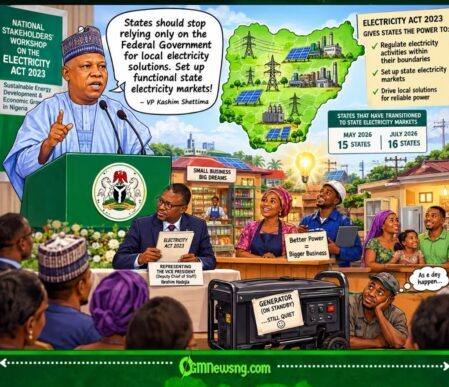
For Wednesday, October 21, 2026, Shettima spoke through the Deputy Chief of Staff to the President, Ibrahim Hadejia, during the opening of the National Stakeholders’ Workshop on the Electricity Act 2023 at the State House Banquet Hall, Presidential Villa, Abuja. The workshop bring together federal and state institutions, regulators and other stakeholders to discuss how the law fit support sustainable energy development and economic growth. Shettima maintain say Nigeria ambition to build competitive industries go remain limited unless electricity reforms produce reliable power for businesses, households and public institutions.
According to the Vice President, states need to take advantage of the law by developing functional electricity markets and attracting private investment. The point no be simply to transfer responsibility from Abuja to state capitals; na to make sure say local authorities get the institutions and technical capacity to deliver. For Nigerian business owners, electricity no be luxury wey dem fit postpone till next government meeting. Na part of the daily cost of production, and when public supply fail, many businesses turn to generators, with fuel and maintenance costs joining their expenses.
Electricity Act 2023: Shettima Warns Say Law Without Action No Go Power Nigeria
The Electricity Act 2023 create legal room for states to establish and regulate electricity markets within their own boundaries, including generation, distribution and supply, subject to the applicable legal framework. The Nigerian Electricity Regulatory Commission (NERC) explain say the commission still handles electricity activities wey cross state boundaries, national-grid-related responsibilities and states wey never formally assume regulatory authority. This means say the reform no be complete withdrawal of the Federal Government; instead, na a division of responsibilities between different levels of government.
The progress so far show say implementation dey happen, but the reported figures depend on the date and the particular milestone wey officials dey count. NERC reported that 15 states had transitioned to state electricity regulation in May 2026, while its July update reported 16. At the October 21 workshop, another report said regulatory transfers had reached 17 states, with Akwa Ibom described as the latest. These figures should not automatically be treated as proof say every one of those states don achieve reliable electricity supply; regulatory transition and actual improvement in power delivery no be the same thing.
Another important matter na consumer protection. If states want investors to build power infrastructure, dem need clear licensing rules, credible regulators, workable tariff arrangements and a transparent system for resolving complaints. Investors need confidence say dem fit recover legitimate costs, while consumers need protection against unfair charges and poor service. If government focuses only on setting up electricity commissions without monitoring performance, Nigerians fit end up with more offices and official documents but still dey buy fuel every other day. The success of the Electricity Act 2023 must therefore show for reliable supply, business growth, investment and better treatment of consumers.
Shettima message don place responsibility firmly before state governments, but the public go judge the reform by wetin happen after the workshop banners don come down. States need to publish clear implementation plans, strengthen their regulatory institutions and show how new investments go improve supply. The Federal Government and NERC still have important coordinating and regulatory roles to play. For OGM News Pidgin, the main question remain: as the Electricity Act 2023 opens new opportunities for states, how quickly go these opportunities turn to dependable electricity for ordinary Nigerians?
Table of Contents
Discover more from OGM News NG
Subscribe to get the latest posts sent to your email.