









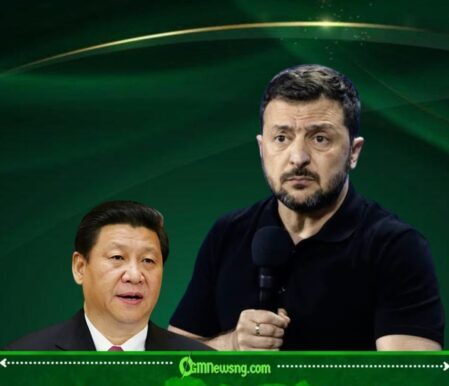
Ukrainian President Volodymyr Zelenskyy has raised fresh concerns that China could provide Russia with technology for a satellite communication system similar to Starlink, potentially strengthening Moscow’s ability to coordinate military operations and threaten Ukrainian airspace. The warning has intensified an already serious debate about satellite technology, military communications and the balance of power in the ongoing war. According to recent reports, the Russian system, known as Rassvet, is being developed as a potential competitor to Starlink, with Chinese support alleged by Ukrainian officials. The concern is clear: in a war where information can be as valuable as ammunition, control of the communication network could influence what happens on the battlefield.
Zelenskyy Warns of a New Technological Threat
Ukrainian President Zelenskyy has warned that China is moving closer to helping Russia develop a Starlink alternative, which could improve Russian forces’ ability to coordinate drones and other military operations. He has urged the United States to consider sanctions against Russian and Chinese companies allegedly involved in the project. Ukrainian officials fear that a more capable satellite network could make it easier for Russia to communicate with weapons systems and identify targets, creating additional challenges for Ukraine’s defences.
In the satirical world of international security, the battlefield appears to have acquired a new rule: whoever controls the signal may get the first move. While soldiers monitor the skies for drones and missiles, governments are also watching satellites circling thousands of kilometres above them. The diplomatic waiting room, meanwhile, is getting crowded with urgent requests, warnings and proposals for sanctions. Apparently, even outer space has become another place where the war refuses to remain on the ground.
Zelenskyy Faces a Race Against Russia’s Satellite Ambitions
The Russian project, Rassvet, is intended to provide satellite internet capabilities comparable in some respects to Starlink. Ukrainian reporting has described an accelerated development effort, while Zelenskyy has warned that Russian access to Chinese technology could increase the danger to Ukraine. However, the extent of Chinese assistance, the system’s actual military capabilities and the timeline for achieving reliable operational coverage remain important questions. The warning should therefore be understood as a serious assessment from Ukraine’s leadership, not proof that Russia has already achieved control of Ukrainian skies.
For Zelenskyy, the challenge is not simply to warn the world but to ensure that Ukraine is not left struggling with yesterday’s technology while its opponent prepares tomorrow’s battlefield. If satellite communications become a decisive military advantage, Ukraine and its partners may need to move faster on alternative networks, air defences and countermeasures. In this unfolding technological contest, even the phrase “connection lost” could carry consequences far beyond an interrupted internet session.
The warning from Ukrainian President Zelenskyy highlights how the war is increasingly shaped by satellite infrastructure and international technology partnerships, as well as weapons on the ground. Whether Russia’s Rassvet system becomes a major battlefield advantage will depend on its capabilities, deployment and the extent of outside assistance. OGM News NG will continue monitoring developments in this high-stakes contest, where the next major shift in the war may begin not with a missile launch, but with a signal from space.
Table of Contents
Discover more from OGM News NG
Subscribe to get the latest posts sent to your email.