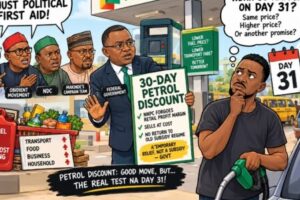






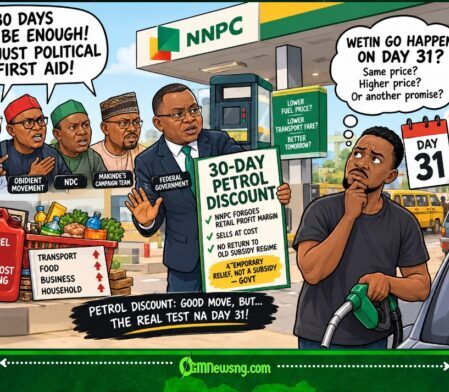
The Federal Government don announce one 30-day petrol discount wey suppose reduce the pressure of high fuel prices on Nigerians, but instead make everybody celebrate, the plan don open another round of political argument. Former Vice President Atiku Abubakar, the Obidient Movement, Nigeria Democratic Congress and the presidential campaign organisation of Oyo State Governor Seyi Makinde don reject the intervention, describing am as inadequate and politically motivated. As the argument dey hot, one question don become the centre of the matter: if petrol relief na only for 30 days, wetin go happen when day 31 arrive? Because for ordinary Nigerians, fuel no be something wey dem dey buy only when government remember say people dey suffer.
Petrol Discount: Government Bring Relief, Opposition Say E No Reach
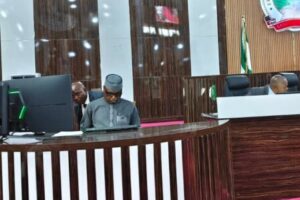
On Thursday, October 8, 2026, Federal Government announce say Nigerian National Petroleum Company Limited (NNPC) go suspend its normal retail profit margin on petrol and sell the product at cost for an initial period of 30 days. Finance Minister and Coordinating Minister of the Economy, Taiwo Oyedele, explain say the arrangement na to cushion the effect of rising global crude oil prices and market volatility on Nigerian households. Government also say public transport operators go receive priority under the arrangement.
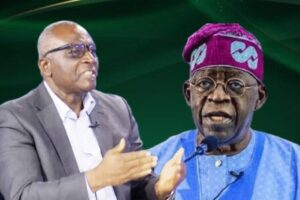
But Atiku Abubakar no accept the petrol discount plan as enough solution. Through a statement from Phrank Shaibu, Director of Strategic Communication of the African Democratic Congress Presidential Campaign Council, Atiku criticise the intervention as a temporary measure wey no go solve the deeper economic hardship. The former Vice President question wetin go happen after the 30-day period, arguing say Nigerians fit return to the same expensive petrol, transport fares and food prices once the temporary relief end. Other opposition groups, including the Obidient Movement, Nigeria Democratic Congress and Seyi Makinde campaign organisation, also reject the proposal, according to the supplied report.
For the political side of the matter, the opposition dey question whether the timing and short duration of the policy make am look more like political damage control than a lasting economic solution. But make we separate accusation from established fact: opposition groups fit suspect political motives, yet the announcement alone no prove say government introduce the measure for electoral advantage. Wetin everybody fit examine na the actual discount, who go benefit and whether the relief go continue to make meaningful difference after the first month.
Petrol Discount and Fuel Subsidy: Wetin Nigerians Need to Understand
President Bola Tinubu government don insist say this arrangement no mean say the old petrol subsidy regime don return. The subsidy removal wey Tinubu announce for May 29, 2023, mark one major change in Nigeria’s fuel pricing policy. Under the new 30-day plan, government say NNPC go forgo its retail profit margin instead of restoring the former subsidy system. The distinction matter because selling petrol without adding one particular profit margin no automatically mean say government dey pay the difference between the market price and a lower official price.
However, the real test of the petrol discount go depend on how government implement am. Recent reporting on the proposal mention a price of ₦1,350 per litre at designated NNPC stations, with the price subject to review. But Nigerians still need clear information on the participating filling stations, the exact savings per litre, how public transport operators go receive priority and whether the savings go reflect for passengers’ fares. The proposed price should not be confused with a guaranteed nationwide price at every filling station.
Another important matter be say petrol price no dey affect only motorists. When fuel becomes expensive, transport operators spend more money to move passengers and goods. Businesses wey depend on generators or road transportation also face additional costs, and those expenses fit eventually enter the price of food and other everyday items. Therefore, even if the petrol discount succeeds at NNPC stations, the benefit Nigerians receive go depend on how much the price drops and whether the savings reach households through lower transport and distribution costs. Government needs to publish clear figures and explain how e go monitor the programme instead of expecting Nigerians to judge am by announcement alone.
The bottom line be say petrol discount fit provide some temporary breathing space, but the bigger question na whether the intervention go produce measurable relief wey ordinary Nigerians go feel. Government deserves to be judged by the result of the policy, while the opposition’s criticism should also face the same test of evidence and practical alternatives. For now, Nigerians go dey watch the pump price, transport fares and market prices closely. Because for a country where many households dey calculate every naira, 30 days of relief fit help—but the real political and economic examination go begin when day 31 arrive.
Table of Contents
Discover more from OGM News NG
Subscribe to get the latest posts sent to your email.