


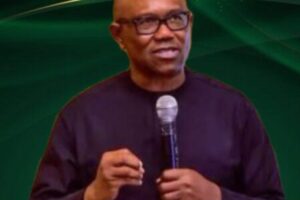


Journalist Rufai Oseni has challenged Peter Obi over the former Labour Party presidential candidate’s renewed claim that he won the 2023 presidential election, questioning the absence of evidence to support the assertion.
PETER OBI recently told BBC Africa that he still believed he won the 2023 election, but acknowledged that he had no evidence to prove the claim. His comments have since reignited debate over the disputed election and the evidence presented during the legal challenges that followed.
“Where Is Your Evidence?” — Rufai Questions PETER OBI
Reacting to PETER OBI’s comments on Arise News, Oseni said a claim of electoral victory should be supported by verifiable evidence. He specifically questioned whether Obi and his team had conducted a detailed, result-by-result analysis capable of demonstrating that the official outcome was wrong.
“Mr Peter Obi, it is best you do not say things if you do not have the evidence,” Oseni said, according to reports of his remarks. He added that repeatedly claiming victory without evidence could affect how seriously the public takes the assertion.
Oseni also asked where Obi’s alleged back-end data, spreadsheets and independent collation of polling results were.
“Didn’t you have back-end analysis of result by result before you make the claim?” Oseni questioned, demanding to know where the data supporting Obi’s position could be examined.
The journalist argued that there is a fundamental difference between believing one won an election and being able to demonstrate the claim through evidence.
PETER OBI: “There’s No Evidence”
The controversy began after PETER OBI was asked in a BBC Africa interview whether he still maintained that he won the February 25, 2023 presidential election despite his legal challenges having been dismissed.
Obi maintained his position but acknowledged that he could not produce evidence proving the claim.
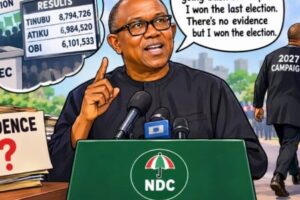
“There’s no evidence. Everything is not based on evidence,” Obi said, before maintaining: “I won the election and that’s where I will end.”
The statement has generated significant political debate because Obi had previously challenged the election result in court, alleging irregularities and seeking to overturn the declared outcome.
According to the results announced by the Independent National Electoral Commission, Bola Tinubu of the All Progressives Congress received 8,794,726 votes, Atiku Abubakar of the Peoples Democratic Party received 6,984,520, while Obi received 6,101,533 votes.
Courts Previously Upheld Tinubu’s Victory
Following the election, Obi and the Labour Party challenged the result before the Presidential Election Petition Court. The petition was dismissed in September 2023.
Obi subsequently appealed to the Supreme Court, which in October 2023 dismissed the appeal and upheld the lower court’s decision affirming Tinubu’s victory. The judicial decisions therefore left the officially declared result intact.
Oseni’s latest comments have consequently shifted attention from the political assertion itself to a more basic question: what evidence supports the claim that Obi actually won the election?
For Obi, the position remains one of conviction despite his admission that he cannot point to evidence proving the claim. For Oseni, however, an assertion of electoral victory requires data that can be independently examined.
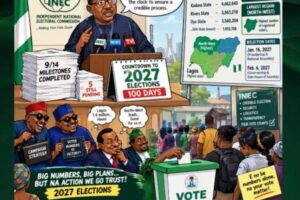
The exchange is likely to keep the 2023 election in Nigeria’s political conversation as preparations for the 2027 presidential election intensify. The latest controversy is not simply about who believes they won the 2023 election; it is about whether a claim of victory can stand without verifiable evidence. Obi maintains that he won, while Oseni is demanding the data behind that assertion. The official election result and subsequent court judgments remain part of the public record. OGM News NG will continue to follow the political debate and examine claims surrounding Nigeria’s 2023 and 2027 elections.
Table of Contents
Discover more from OGM News NG
Subscribe to get the latest posts sent to your email.