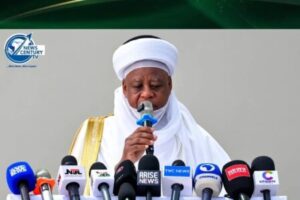
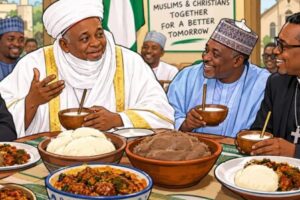





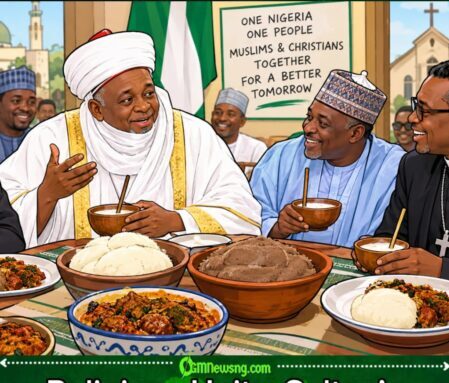
Religious Unity don enter another interesting level as Sultan of Sokoto, Alhaji Muhammadu Sa’ad Abubakar III, say Muslim and Christian leaders fit sit for one place, talk together, drink fura, eat tuwo and amala without turning the table into another battlefield. The Sultan make the remark while stressing the importance of understanding between people of different faiths, especially as Nigeria dey move closer to another politically charged election season.
The statement get humour inside because food no dey usually require constitutional amendment before Nigerians fit share am. But behind the amala, tuwo and fura joke, the Sultan message serious: religious differences should not become permanent barriers to cooperation. And with Nigeria still dealing with insecurity, hate speech and political tension, the bigger question be whether leaders and ordinary citizens fit carry the same spirit from meeting rooms enter everyday community life.
Religious Unity: Amala, Tuwo and Fura Become Sultan’s Peace Menu
The Sultan tell participants say he dey thankful to Muslims and Christians who believe say dem fit sit together, talk, drink and eat together. He describe such regular engagement as important for Nigeria, while saying understanding should go beyond merely tolerating another person. In his words, the issue no be just to “tolerate” one another but to understand who everybody be and work together for the country.
That message come shortly after the September 23 meeting of the Nigeria Inter-Religious Council, NIREC, where senior Muslim and Christian leaders, traditional rulers and government representatives gathered in Abuja to discuss peaceful coexistence, national development and the role of religion in fighting corruption. The Sultan and CAN President Archbishop Daniel Okoh remain the co-chairmen of NIREC, a body created to provide a platform for Christian-Muslim dialogue.
Religious Unity Meets 2027 Politics and Security
The Sultan’s Religious Unity message also come with warning about politics. He advised religious leaders not to turn churches, mosques or other religious gatherings into campaign platforms ahead of the 2027 elections, arguing that religious leaders should be careful about what dem say concerning political candidates and their behaviour.
The wider push no start today. In July, the Sultan and CAN leadership urged Nigerians to reject hate speech and embrace dialogue, while an Interfaith Code of Conduct was unveiled to encourage responsible religious leadership and peaceful coexistence. In August, Muslim and Christian organisations also reached agreements in Abuja aimed at strengthening cooperation against religious intolerance, hate speech and violent extremism, including plans for stronger joint structures for interfaith engagement.
The Sultan has also made similar appeals earlier this year. In May, he rejected claims that Nigerian Muslims were planning to eradicate Christianity, describing such claims as harmful to national cohesion. In August, he again appealed to Christians and Muslims to stop insulting one another, saying peaceful living requires both sides to respect each other.
So, while the picture of Muslim and Christian leaders sharing amala, tuwo and fura fit make social media laugh small, the underlying Religious Unity message serious: food fit bring people close, but trust, restraint, honest dialogue and cooperation na wetin go keep them together after everybody don wash hand finish. OGM News Pidgin go continue to watch whether this call for understanding go remain inside conference halls—or gradually enter communities, religious gatherings and the political season ahead.
Table of Contents
Discover more from OGM News NG
Subscribe to get the latest posts sent to your email.