








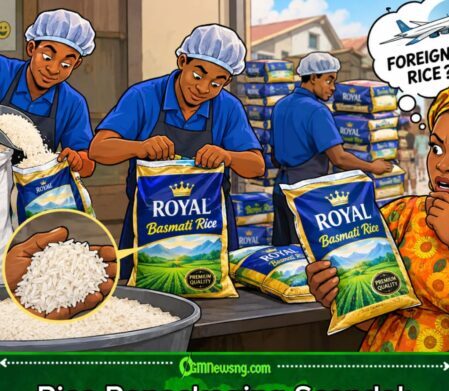
Rice Repackaging don enter fresh public conversation after one viral video allegedly show workers pouring raw rice into bags carrying foreign-brand identities, sealing the bags and arranging them for sale. The footage don trigger plenty questions online, especially from consumers wey dey pay premium money because dem believe say the rice inside na imported product. The big question now be simple: if the bag travel with the eyes but the rice no travel anywhere, who exactly dey collect the foreign-rice money?
Viral Video Expose Wetin Market Fit Hide
The Rice Repackaging video reportedly show workers handling locally sourced-looking rice before dem pour am inside branded bags associated with foreign rice. The process, as presented in the viral footage, appear straightforward: empty branded sack, pour rice inside, seal am and prepare am for the market. If the contents no match the identity on the package, that one no longer be ordinary change of bag; e fit become serious consumer-deception matter, depending on the facts established by investigators.
And na here the matter dey get small comedy wey no funny at all: the rice fit be Nigerian, the bag fit look international, but the person wey dey pay no get any diplomatic immunity from high market price. Foreign Bags fit make ordinary rice look like say e just land from overseas, even when nobody carry am pass border. But viral video alone no prove every bag or every trader for the market dey involved, so proper verification remain important before anybody point accusing finger at particular business or individual.
Foreign Bags, Consumer Protection And Bigger Market Wahala
This kind Foreign Bags practice no be completely new allegation for Nigeria. A 2025 investigation reported cases in Lagos and Ebonyi where locally grown rice was reportedly destoned, polished and repackaged in foreign-branded sacks before being marketed as imported rice. The investigation also described branded empty sacks being openly available in some markets and documented allegations of traders using them to increase the perceived value of local rice.
Regulators don also treat misleading food packaging and labelling as serious matters. NAFDAC’s 2025 regulations cover issues including non-compliant labelling, defective packaging, adulteration and food fraud, while its food-registration regulations state that food products generally must be registered before they are manufactured, imported, advertised, sold or distributed in Nigeria. In April 2025, the Federal Competition and Consumer Protection Commission also reported seizing falsely branded rice during a surveillance operation in Abuja, saying local rice was allegedly being packaged in bags bearing brands associated with imported rice.
The issue therefore go beyond whether local rice good or bad. Nigerian-grown rice fit be perfectly legitimate food when properly processed, packaged and honestly described. The problem comes when packaging allegedly gives consumers a false impression about the product’s origin, identity, quality or value. That kind practice fit punish honest rice farmers and processors while making consumers pay extra money for a story printed on a sack.
For consumers, the viral Rice Repackaging footage be another reminder say packaging alone no be laboratory test. Buyers should pay attention to proper labelling, manufacturer or importer information, registration details where applicable, seal integrity and the condition of the rice itself. If person suspect fake or misleading food packaging, the safer route na to report the matter to the appropriate consumer-protection or regulatory authority instead of relying only on social-media accusations.
At the end of the day, Foreign Bags no fit magically turn local rice into imported rice, just as changing shirt no change person’s identity. The real solution na transparency: if na Nigerian rice, sell am as Nigerian rice; if na imported rice, make the claim match the actual product. OGM News Pidgin go continue to monitor the matter as authorities, traders and consumers respond to the growing conversation around food authenticity.
Table of Contents
Discover more from OGM News NG
Subscribe to get the latest posts sent to your email.