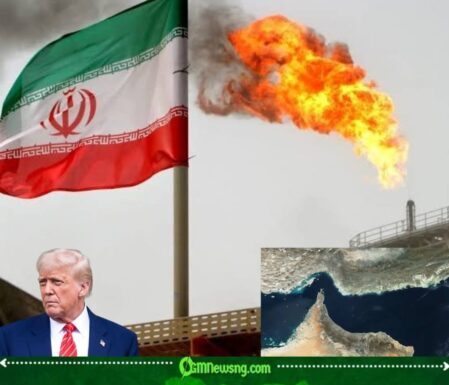
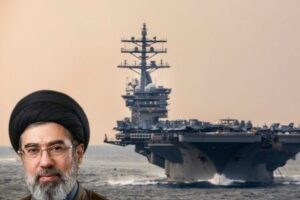






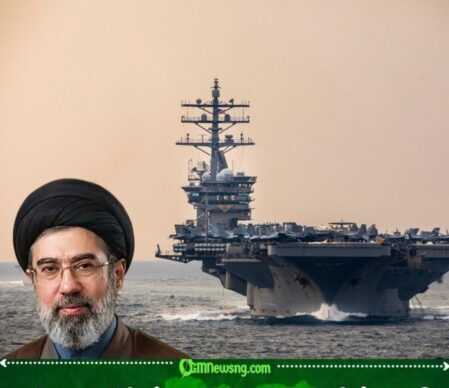
Iran has declared that the strategically vital Strait of Hormuz is not the property of “everyone,” insisting that the waterway falls under Iranian authority and will be governed by Iran. The statement comes amid an increasingly tense dispute over who should control maritime traffic through the strait, one of the world’s most important energy corridors. Iran’s First Vice President Mohammad Reza Aref recently described the strait as “the property of Iran” and said Tehran regarded its control as an exercise of its sovereign and legal rights.
The declaration has added another layer to an already complicated geopolitical argument involving Iran, Oman, the United States and international shipping interests. The Strait of Hormuz lies between Iran and Oman, and recent negotiations have focused on how commercial traffic could resume safely, with Iran and Oman discussing arrangements for managing shipping through their respective waters.
Iran Draws a Line Through the Strait
Iran has continued to insist that foreign powers should not dictate how the Strait of Hormuz is managed. Tehran’s position has become particularly forceful during the current regional confrontation, with Iranian officials asserting control over maritime traffic and demanding that vessels obtain permission before passing through the waterway.
In a development that could make international shipping meetings considerably more interesting, Iran appears to be treating the strait less like a shared global highway and more like a road whose traffic rules come with a very large “Ask Iran First” sign. The joke, however, carries serious consequences: the waterway is a crucial route for global energy supplies, meaning disputes over access can quickly become disputes over oil prices, shipping and international security.
Iran Faces International Questions Over Hormuz
Iran has maintained that its position is connected to its sovereignty and security interests, while also negotiating with Oman over arrangements for reopening and managing maritime traffic. Recent proposals have included a temporary shipping corridor involving Iranian and Omani waters, while Tehran has pushed for substantial Iranian control over key shipping lanes.
The situation has also attracted the attention of President Donald J. Trump, whose administration has made competing claims regarding control of the waterway. At the same time, shipping traffic through the strait has remained severely reduced, underscoring how quickly a geopolitical argument can turn into a problem for ships, energy markets and everyone checking fuel prices.
For now, Iran appears determined to maintain its position while negotiations over the future of the Strait of Hormuz continue. Whether Tehran’s claim produces a lasting maritime arrangement, another diplomatic confrontation or yet another chapter in the region’s already crowded geopolitical drama remains to be seen. OGM News NG will continue monitoring the situation and bring readers further updates as the story develops.
Table of Contents
Discover more from OGM News NG
Subscribe to get the latest posts sent to your email.