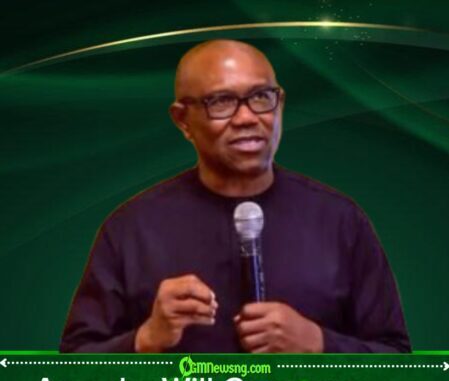









Islamic cleric Sheikh Ahmad Gumi has sparked a fresh debate over leadership and governance in Nigeria after stating that Islamic scholars can provide better leadership than politicians.
Islamic cleric Sheikh Ahmad Gumi made the assertion amid ongoing concerns about governance, accountability and the performance of political leaders in Nigeria. His position has renewed discussions about the qualities required to provide effective leadership and whether religious scholars could offer an alternative approach to managing public affairs.
ISLAMIC CLERIC SHEIKH AHMAD GUMI QUESTIONS POLITICAL LEADERSHIP
Islamic cleric Sheikh Ahmad Gumi questioned the effectiveness of Nigeria’s political leadership, suggesting that Islamic scholars could potentially provide a better standard of leadership.
The statement is likely to generate reactions across political and religious circles, particularly because Nigeria is a religiously diverse country where questions surrounding the relationship between faith, politics and governance often attract strong public interest.
GUMI’S ARGUMENT COMES AMID GOVERNANCE CONCERNS
The position expressed by Islamic cleric Sheikh Ahmad Gumi comes against the backdrop of longstanding concerns over insecurity, corruption, poverty, unemployment and economic hardship.
Many Nigerians have continued to demand greater accountability, competence and transparency from elected officials. Gumi’s statement therefore adds to the broader conversation about whether the country’s political system is producing the quality of leadership required to address its numerous challenges.
RELIGIOUS SCHOLARS AND GOVERNANCE VS POLITICIANS AND GOVERNANCE
The comments by Islamic cleric Sheikh Ahmad Gumi also raise questions about the potential role of religious leaders in public administration.
Supporters of his argument could point to qualities such as moral discipline, integrity, accountability and service as attributes that religious scholars may bring to leadership. However, critics may argue that governing a complex and religiously diverse country requires political, administrative, economic and technical expertise in addition to moral authority.
Nigeria’s constitutional framework also provides for a secular democratic system in which citizens of different religious backgrounds participate in governance.
LEADERSHIP DEBATE LIKELY TO CONTINUE
The declaration by Islamic cleric Sheikh Ahmad Gumi is likely to generate further debate among politicians, religious leaders, civil society organisations and ordinary Nigerians.
While some may interpret the statement as a criticism of the political class, others may question whether religious scholarship should be considered a substitute for the broad range of competencies required in modern governance.
Ultimately, the comments by Islamic cleric Sheikh Ahmad have added another dimension to Nigeria’s continuing conversation about leadership, accountability and the search for solutions to the country’s political and socioeconomic challenges. OGM NewsNG will continue to update you on new development.
Table of Contents
Discover more from OGM News NG
Subscribe to get the latest posts sent to your email.