

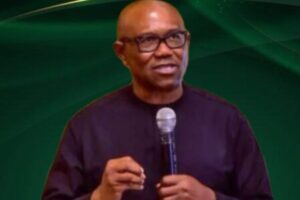







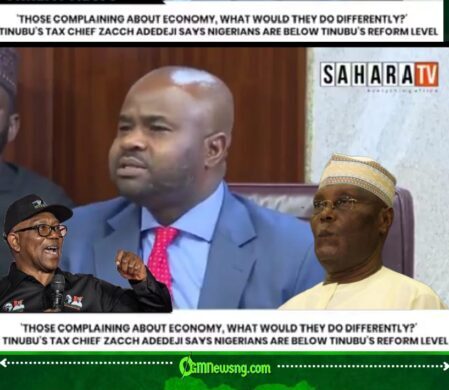
Dr Zacch Adedeji, Chairman of the Nigeria Revenue Service (NRS), has stirred political debate after reportedly taking a swipe at former Vice President Atiku Abubakar and former Anambra State Governor Peter Obi, arguing that both opposition figures are below President Bola Ahmed Tinubu’s level when it comes to economic reforms.
Adedeji’s comments come amid an increasingly heated national conversation over the direction of Nigeria’s economy, with supporters of the Tinubu administration highlighting its reforms while opposition figures continue to criticise the government’s policies and their impact on citizens.
ADEDEJI HIGHLIGHTS TINUBU’S REFORM AGENDA
The NRS chairman reportedly positioned President Bola Ahmed Tinubu’s economic reform programme as more ambitious and transformative than the approaches associated with Atiku and Obi.
According to Adedeji, the reforms being implemented under Tinubu demonstrate a level of policy ambition and willingness to make difficult decisions that he believes distinguishes the President from his political rivals.
The comments are likely to attract further attention because both Atiku and Obi remain prominent opposition figures and possible players in Nigeria’s political landscape ahead of the 2027 general elections.
ATIKU AND OBI REMAIN CRITICAL OF GOVERNMENT POLICIES
Atiku Abubakar has consistently advocated economic policies centred on greater private-sector participation, institutional reforms and restructuring of government operations. Peter Obi, meanwhile, has frequently called for greater fiscal discipline, productivity, investment in human capital and improved management of public resources.
Their respective policy positions have continued to feature prominently in national debates over how Nigeria can achieve sustainable economic growth and improve living standards.
TINUBU’S REFORMS REMAIN CONTROVERSIAL
Since assuming office, President Bola Ahmed Tinubu has introduced several major economic policies, including the removal of the petrol subsidy, foreign-exchange reforms and changes to Nigeria’s tax and revenue framework.
The administration maintains that the reforms are necessary to reposition the economy, attract investment and create the foundation for long-term growth. Critics, however, have argued that the policies have imposed significant short-term pressure on households and businesses.
The debate has therefore remained sharply divided between those who see the reforms as necessary structural changes and those who believe the government should have adopted a less disruptive approach.
POLITICAL IMPLICATIONS OF ADEDEJI’S COMPARISON
Adedeji’s comparison of Tinubu with Atiku and Obi adds another dimension to the political debate as Nigeria approaches the 2027 election cycle.
While supporters of the President are expected to use the administration’s reform agenda as part of the case for continuity, opposition figures are likely to continue challenging the government’s economic record and presenting alternative policy proposals.
The comments by the NRS chairman are therefore likely to generate further reactions from supporters of Atiku and Obi, particularly as political alignments and campaigns gradually intensify ahead of the next presidential election. For now, the debate over who possesses the stronger reform credentials remains closely tied to the broader question of whether President Bola Ahmed Tinubu’s economic policies will ultimately deliver the growth, prosperity and improved living standards promised by his administration OGM News NG will continue to update you.
Table of Contents
Discover more from OGM News NG
Subscribe to get the latest posts sent to your email.