







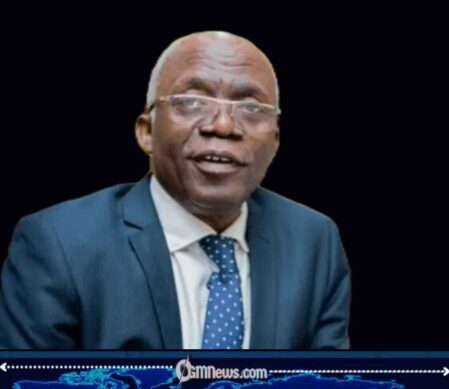
Human rights lawyer and Senior Advocate of Nigeria (SAN), Femi Falana, has defended the Economic and Financial Crimes Commission (EFCC) over its decision to freeze an Osun State Government account, arguing that the anti-graft agency acted within its statutory powers and should not be accused of illegality merely because an election is approaching.
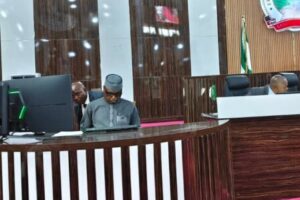
The intervention comes amid a politically charged dispute involving the Osun State Government, the EFCC and President Bola Tinubu. Governor Ademola Adeleke has criticised the timing of the EFCC action and alleged political motivation, while the commission has maintained that it detected suspicious movement of public funds. President Tinubu, according to the material provided, acknowledged the agency’s mandate but considered the timing problematic. The controversy is unfolding as Osun prepares for its August 15, 2026 governorship election.
Falana: Election Countdown Cannot Become a Shield Against Investigation
Falana’s position is straightforward: the arrival of an election date does not automatically place public finances beyond the reach of anti-corruption investigators. He argued that where billions of naira are suspected to be moving through questionable transactions, an agency charged with investigating financial crimes cannot simply look away because politicians have begun counting down to polling day.
In the slightly absurd theatre of Nigerian election-season politics, the calendar may be ticking loudly, but Falana’s argument is that the law does not own a pause button. He said the EFCC has powers to place restrictions on accounts suspected of involvement in financial crimes, subject to the required legal process and subsequent approach to the court within the prescribed period. Historical judicial decisions have nevertheless stressed that EFCC restrictions on accounts must comply strictly with due process, underscoring why the legal procedure remains central to the dispute.
Timing Becomes the Real Political Battlefield
The controversy therefore appears to have shifted from whether corruption investigations should occur to when they should occur. President Tinubu’s reported concern was not that the EFCC lacked a mandate, but that acting so close to an election could create the appearance of federal interference. Falana suggested that the concern over timing could have been handled administratively through the Attorney-General of the Federation rather than by questioning the commission’s investigative authority.
For Adeleke’s government, however, the matter has already moved beyond political commentary, with the governor reportedly filing a ₦2 billion lawsuit against the EFCC. The dispute adds another layer to an already tense Osun political environment, where accusations involving voter mobilisation, alleged vote-buying and competing claims of political interference have intensified ahead of the poll.
Whether the EFCC’s action ultimately survives every legal challenge will depend on the courts and the precise procedure followed by the commission. For now, Falana’s intervention has supplied the anti-corruption agency with a prominent legal defence, while Adeleke’s challenge ensures that the controversy is unlikely to disappear quietly. OGM News NG will continue to watch the court proceedings, the EFCC’s next move and the political fallout as Osun heads toward election day.
Table of Contents
Discover more from OGM News NG
Subscribe to get the latest posts sent to your email.