





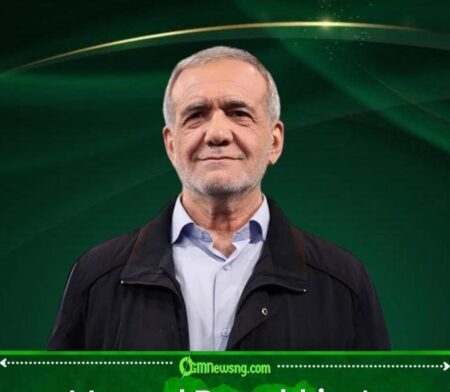
Iranian President Masoud Pezeshkian has acknowledged that Iran is dealing with internal challenges and differing viewpoints, a remarkably diplomatic way of saying that not everyone in Tehran appears to have received the same memo. His comments come as Iran’s leadership faces intense pressure over the country’s confrontation with the United States, negotiations, economic difficulties and the future of the strategically important Strait of Hormuz. Recent reporting indicates that sharp disagreements exist within Iran’s political establishment over how aggressively the country should pursue its wartime objectives and whether diplomacy with Washington should be pursued.
The remarks are particularly significant because Masoud Pezeshkian has increasingly found himself at the center of questions about how much room Iran’s elected government has to shape major national decisions. While Iranian officials have publicly emphasized unity, reporting has pointed to differences between pragmatists around Pezeshkian and hard-line factions that oppose concessions to the United States.
Masoud Pezeshkian Faces a House of Different Opinions
Masoud Pezeshkian has sought to project cooperation and unity within Iran’s leadership, but the political reality appears considerably more complicated. Recent reports describe disagreements over negotiations with Washington, the war’s objectives and the handling of the Strait of Hormuz, with Pezeshkian and other pragmatists favoring a negotiated resolution while hard-line figures resist what they regard as unacceptable concessions.
In the satirical department, Iran’s leadership may soon need a meeting room large enough to accommodate every opinion currently competing for attention. One side wants diplomacy, another wants maximum pressure, and somewhere in the middle Masoud Pezeshkian appears to be discovering that being president does not automatically mean everyone agrees with the person holding the title.
Masoud Pezeshkian Tries to Keep the Leadership Together
The situation has placed Masoud Pezeshkian in a delicate position. Earlier reports suggested tensions between the president and powerful security and military figures, while Pezeshkian’s government has repeatedly pushed back against claims that the country’s leadership is falling apart. The president has also denied reports that he threatened to resign amid disagreements over negotiations and the Strait of Hormuz.
For Masoud Pezeshkian, the challenge is therefore bigger than simply acknowledging different opinions. He must navigate a political system in which the presidency shares power with institutions and security structures that possess enormous influence over national strategy. Recent analysis has described the country’s leadership as presenting a united public front while experiencing significant internal disagreement over the direction of the conflict and diplomacy.
Masoud Pezeshkian’s acknowledgment of internal challenges and differing viewpoints provides another glimpse into the complicated political calculations taking place inside Iran. Whether those differences ultimately produce compromise, deeper confrontation or a new political balance remains uncertain. OGM News NG will continue watching the developments and bring readers further updates as Iran’s internal debate unfolds.
Table of Contents
Discover more from OGM News NG
Subscribe to get the latest posts sent to your email.