






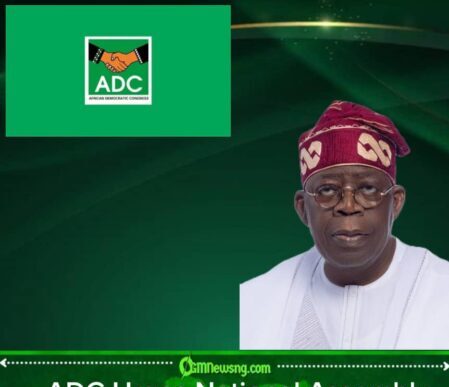
Nigeria’s political theatre has unveiled yet another dramatic episode, with the African Democratic Congress (ADC) urging the National Assembly to examine whether President Bola Tinubu remains constitutionally fit to continue discharging the duties of his office. The opposition party claims recent controversies surrounding appointments at the Border Communities Development Agency (BCDA) have exposed what it describes as growing uncertainty over who truly exercises presidential authority. While the allegations remain political claims that have not been judicially established, the development has intensified debate over accountability, governance and executive decision-making.
Rather than presenting the controversy as an ordinary political disagreement, the ADC has painted a picture of a government where official directives appear to be playing an endless game of hide-and-seek. In Nigeria’s ever-busy political marketplace, the latest episode has inspired satire, speculation and serious constitutional conversations all at once.
Presidential Orders Begin Playing Musical Chairs Says ADC
According to the ADC, reports suggesting that a presidential directive concerning the BCDA may have been ignored raise constitutional concerns that deserve legislative scrutiny. The party argues that if appointments or removals announced by the Presidency can allegedly be disregarded without consequence, Nigerians deserve clear answers about who is making final decisions inside government.
In satirical terms, observers joked that official directives now appear to travel through so many invisible checkpoints that even the paperwork may need GPS navigation before reaching its destination. One minute an appointment exists, the next minute it appears suspended in political limbo, leaving citizens wondering whether government files have secretly enrolled in reality television.
Policy U-Turns Keep Fueling Political Comedy
The ADC also pointed to previous policy reversals, including the suspension of the Cybersecurity Levy and the withdrawal of the Expatriate Employment Levy after public criticism. The opposition argued that repeated changes in government decisions weaken investor confidence, confuse public institutions and create uncertainty over official policy implementation.
The party has therefore urged the National Assembly to invoke constitutional provisions to determine whether President Tinubu remains fully capable of personally exercising the powers of his office. The Presidency has consistently maintained that President Tinubu remains in charge of his administration, while government officials have defended executive decisions on various occasions. As expected, supporters of the administration dismiss the ADC’s position as political grandstanding ahead of future electoral contests, while critics insist transparency is essential for public confidence.
Whether the BCDA controversy ultimately becomes a constitutional landmark or simply another chapter in Nigeria’s colourful political rivalry remains to be seen. What is certain is that the debate has once again placed executive authority under public scrutiny. OGM News NG will continue monitoring official responses, parliamentary developments and any further clarification surrounding the controversy as events unfold.
Table of Contents
Discover more from OGM News NG
Subscribe to get the latest posts sent to your email.