








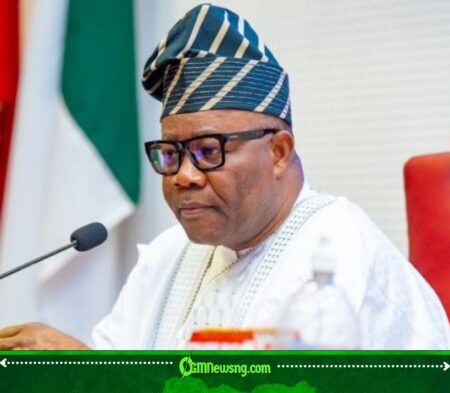
Senate President Godswill Akpabio has delivered one of the most striking interventions in Nigeria’s ongoing State Police debate, warning governors against creating policing structures that could later be abused for political purposes. As discussions continue over constitutional amendments to establish state-controlled police services, the Senate President urged political leaders to think beyond their current tenure and consider the long-term consequences of their decisions.
His comments introduced a note of caution into a debate that has largely focused on security benefits. While supporters of state policing argue that decentralization could improve local security responses, Akpabio emphasized that institutional safeguards are just as important as operational effectiveness.
Godswill Akpabio Warns Against Abuse of State Police
Speaking on the proposed reforms, Godswill Akpabio reminded governors that public office is temporary. He noted that many political leaders eventually return to private life and should therefore support the creation of institutions that protect citizens equally, regardless of political status.
According to Akpabio, leaders should not establish systems that they themselves might fear once they leave office. His remarks reflected concerns that policing powers, if not properly regulated, could be used to target political opponents, critics, or former office holders.
The Senate President’s warning touches on one of the most persistent concerns raised by opponents of state policing: the possibility that governors could exercise undue influence over local law enforcement agencies.
Akpabio Urges Governors to Use State Police Responsibly
The proposed State Police system seeks to decentralize Nigeria’s policing structure by allowing states to establish and manage their own police services. Supporters argue that local authorities are often better positioned to understand and respond to security challenges within their jurisdictions.
However, critics have consistently warned about the risks of political interference, selective enforcement, and uneven standards across states. These concerns have fueled calls for strong constitutional safeguards, independent oversight mechanisms, and clear limits on executive influence.
Akpabio’s remarks underscore the reality that the success of State Police may depend not only on security outcomes but also on public confidence in the fairness and independence of the institutions created. Without adequate protections, a reform intended to improve security could generate new governance challenges.
As lawmakers continue deliberations on the constitutional amendments, Godswill Akpabio has placed accountability at the center of the conversation. His message to governors is clear: build a State Police system that serves justice and public safety today—and one that you would still trust tomorrow after leaving office.
Table of Contents
Discover more from OGM News NG
Subscribe to get the latest posts sent to your email.