



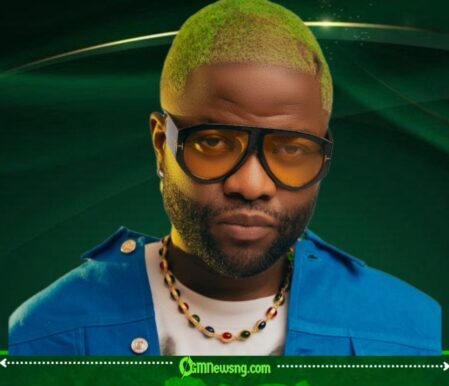
Skales and the 2027 Elections have unexpectedly become linked in one of the latest political debates dominating Nigerian social media. The singer’s declaration that he would not settle for a “lesser evil” candidate has triggered passionate reactions, drawing praise from supporters and criticism from opponents. What appeared to be a straightforward personal opinion has evolved into a broader discussion about political expectations, voter responsibility, and the increasing scrutiny faced by public figures who venture into political conversations.
Skales Defends His Political Opinion Ahead of 2027 Elections
The Skales controversy emerged after the singer publicly stated that no amount of pressure or criticism would convince him to accept what he considers a “lesser evil” political option in the 2027 Elections. His remarks quickly spread across social media platforms, where users debated both the meaning and implications of his position.
The musician subsequently stood by his comments despite criticism from various quarters. While some supporters viewed his stance as a call for higher standards in political leadership, others argued that democratic systems often force voters to choose among imperfect candidates. In the uniquely energetic marketplace of Nigerian online politics, where every citizen suddenly becomes a constitutional scholar after midnight, the discussion rapidly escalated beyond the singer’s original statement.
Music Star Refuses to Bow to Online Pressure Over 2027 Elections
The 2027 Elections are already generating political conversations despite being years away. Analysts have observed growing public frustration over governance, economic conditions, and political accountability, factors that are likely to influence voter attitudes as the next electoral cycle approaches. In this environment, statements from celebrities often attract attention because they resonate with broader public sentiments.
The Skales debate also reflects a wider trend in Nigerian politics, where entertainers, influencers, and public figures increasingly use their platforms to comment on national issues. While such interventions can encourage civic engagement, they frequently expose public figures to intense criticism from supporters of competing political viewpoints. The resulting exchanges often reveal how polarized political discourse has become, with social media functioning as both a public square and a digital battleground.
Beyond the immediate controversy, the episode highlights a recurring question in democratic societies: should voters choose the best available option or refuse to support candidates they consider inadequate? While Skales’ statement does not provide an answer, it has reignited a conversation that is likely to grow louder as political parties begin positioning themselves for future campaigns.
For now, Skales remains firm in his position, and the 2027 Elections remain a distant but increasingly influential topic in public discourse. OGM News Nigeria understands that debates surrounding political choices, voter expectations, and public accountability are likely to intensify in the coming years, ensuring that this conversation remains far from settled.
Table of Contents
Discover more from OGM News NG
Subscribe to get the latest posts sent to your email.