








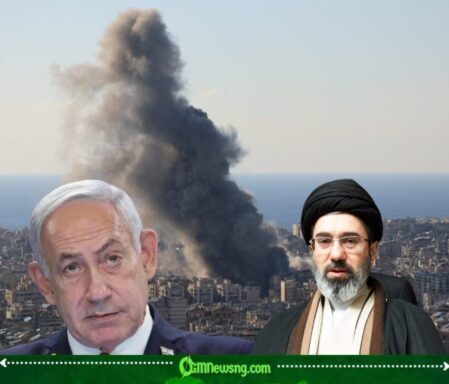
Iran and the prospect of retaliation have once again become the focus of global attention after reports emerged suggesting that Tehran is preparing a possible military response against Israel in the near future. The development has triggered fresh anxiety across diplomatic circles, military establishments, and financial markets, where officials are attempting to determine whether the latest warning represents strategic messaging or the beginning of another major escalation. As speculation grows, observers say the next few days could prove critical for the stability of an already volatile region.
Iran’s Retaliation Threat Sparks Fears of Another Regional Explosion
Iranian officials have increasingly signaled that actions taken against Iranian interests in recent months will not go unanswered. The latest statements have fueled concerns that a new phase of confrontation may be approaching, particularly as both Iran and Israel continue to accuse one another of threatening regional security. While no precise details regarding the timing or nature of any potential operation have been disclosed, the warning alone has been enough to place military and intelligence agencies throughout the region on heightened alert.
Retaliation has become one of the most closely watched themes in Middle Eastern geopolitics. Previous exchanges between Iran and Israel have involved missile launches, drone operations, cyber activity, and actions carried out through allied groups operating across several countries. The result has been a cycle in which every statement, military movement, or diplomatic signal is scrutinized for indications of what may come next. Critics argue that the region has become trapped in an endless game of strategic chess, except that the pieces occasionally explode.
Is the Middle East Heading Toward a New War After Iran’s Latest Warning?
The possibility of a broader conflict remains a major concern for international observers. Governments across Europe, Asia, and North America have repeatedly urged restraint, warning that further escalation could destabilize trade routes, energy supplies, and ongoing diplomatic efforts. The Middle East remains one of the world’s most strategically significant regions, meaning that developments involving Iran and Israel often produce consequences that extend far beyond their borders.
Military analysts note that the current environment differs from previous periods of tension because both sides have demonstrated a greater willingness to engage directly rather than relying solely on indirect pressure. This has increased fears that miscalculation, misunderstanding, or even an isolated incident could rapidly evolve into a larger confrontation. While officials continue to speak publicly about deterrence and security, ordinary citizens across the region are once again finding themselves caught between competing narratives and growing uncertainty.
Middle East Alarm Clocks Ring Again as Iran Says “Something Big Is Coming”
The latest warning has also reignited debates about diplomacy and crisis management. International negotiators have spent months attempting to encourage dialogue, reduce hostilities, and prevent further military exchanges. Yet each new threat places those efforts under renewed pressure, leaving diplomats with the difficult task of convincing rivals to step back while both sides insist they are acting in self-defense. In diplomatic language, this is often called “maintaining stability.” In ordinary language, it resembles trying to extinguish a fire while someone keeps delivering fresh boxes of matches.
Economic observers are monitoring developments just as closely as military planners. Previous confrontations involving Iran have affected shipping routes, energy prices, and investor confidence. Any significant escalation could once again create uncertainty in global markets, particularly if strategic waterways or critical infrastructure become involved. As governments prepare contingency plans and security officials analyze intelligence reports, the world is left waiting to see whether the latest warning becomes another chapter in a long-running war of words or the opening act of a more serious confrontation.
Iran remains at the center of a story that continues to evolve with remarkable speed. Whether retaliation ultimately occurs or diplomatic efforts succeed in preventing further escalation, the situation underscores how fragile regional stability remains. For now, officials, analysts, and citizens alike are watching closely, aware that a single decision could alter the trajectory of events across the Middle East. OGM News Nigeria will continue monitoring developments and providing updates as this high-stakes situation unfolds.
Table of Contents
Discover more from OGM News NG
Subscribe to get the latest posts sent to your email.