





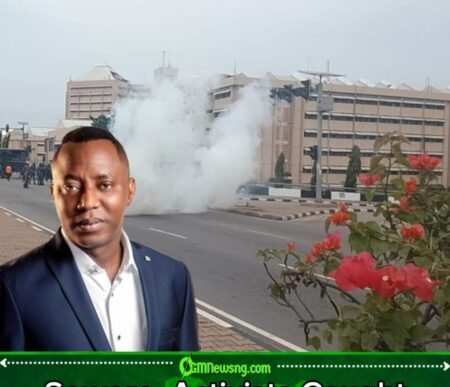
The June 12 Protest became one of the most talked-about events of Nigeria’s Democracy Day celebrations after reports emerged that police operatives fired Teargas at demonstrators in Abuja, forcing many participants to flee. Among those reportedly affected was activist Omoyele Sowore, whose presence at the gathering drew significant public attention. What began as a peaceful demonstration soon evolved into a tense confrontation that has reignited conversations about civil liberties, public protest, and the meaning of democracy in modern Nigeria.
The incident unfolded against the backdrop of official Democracy Day commemorations across the country. While government officials celebrated Nigeria’s democratic journey, protesters gathered to express concerns about economic hardship, insecurity, unemployment, and broader governance issues. The resulting clash between state authority and public dissent created a striking contrast on a day intended to honour democratic freedoms.
Confrontation On Protest Ground And Mobilization
The June 12 Protest was part of a wider mobilisation announced by several civil society organisations and activist groups ahead of Democracy Day. Organisers had publicly outlined demands relating to insecurity, inflation, rising living costs, and governance reforms. The demonstrations were intended to take place across multiple states, with Abuja serving as one of the focal points.
According to reports from the scene, tensions escalated when security personnel moved to disperse demonstrators. Eyewitness accounts indicated that Teargas was deployed, causing protesters to scatter. Videos circulating online showed scenes of confusion as participants attempted to escape the fumes. The reported involvement of Sowore further amplified public attention, given his long-standing role in political activism and protest movements in Nigeria. Similar confrontations between protesters and security agencies have occurred during previous June 12 demonstrations, highlighting a recurring pattern of friction surrounding public protests.
June 12 Protest Democracy Based On Provision Of Human rights
The controversy surrounding the Abuja incident extends beyond the immediate confrontation. Democracy Day itself commemorates the struggle for democratic governance in Nigeria and remains closely linked to debates about civil rights, freedom of expression, and citizen participation in public affairs. The symbolism of a June 12 Protest being dispersed with Teargas has therefore become a subject of intense discussion among political observers and rights advocates.
Recent announcements by protest organisers show that concerns over economic hardship and insecurity continue to drive public demonstrations. Civic groups have argued that peaceful protests remain a legitimate democratic tool for expressing dissatisfaction with government policies. At the same time, authorities often cite public safety and order as reasons for maintaining a strong security presence at such gatherings. The tension between these positions remains one of the defining features of Nigeria’s democratic landscape.
As reactions continue to emerge, the June 12 Protest and the deployment of Teargas are likely to remain central topics in discussions about democracy, governance, and civil liberties in Nigeria. OGM News Nigeria will continue monitoring developments, official responses, and eyewitness accounts as the story unfolds and as questions persist over how a nation commemorates democratic progress while managing public dissent.
Table of Contents
Discover more from OGM News NG
Subscribe to get the latest posts sent to your email.