









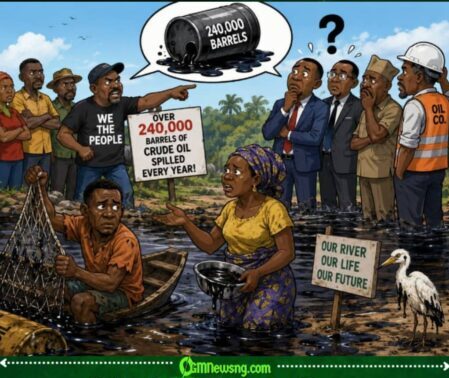
Crude Oil don return to headline again after a civil society group under the banner of We, The People raise fresh alarm say more than 240,000 barrels dey spill annually across parts of the Niger Delta. The claim don reopen old wounds about pollution, environmental management and whether enough dey happen to stop valuable resources from turning rivers and farmlands into unwanted storage tanks.
The revelation come with serious concern, but e also carry one question wey many residents don ask for years: how one region fit be among the biggest oil-producing areas for Africa, yet stories about pollution and environmental losses still dey appear like monthly subscription service? As discussions heat up, attention don return to the real cost of repeated Spillage incidents.
Spillage Alarm And Economic Waste
According to the group, the annual volume of Crude Oil wey reportedly enters the environment represents both economic waste and environmental danger. Dem argue say communities continue to face challenges linked to contaminated water sources, damaged farmlands and reduced fishing opportunities. The organisation urge authorities, regulators and industry players to strengthen prevention measures and improve response mechanisms whenever incidents occur.
The concern no be entirely new. For years, environmental reports and government investigations have pointed to a combination of factors behind many Spillage incidents, including aging infrastructure, equipment failure, operational lapses and acts of sabotage. While stakeholders often disagree on which factor carry the biggest blame, communities usually find themselves at the receiving end whenever crude oil leave pipeline and enter river.
Accountability Pn Environmental Restoration
The latest concerns also fit into a broader conversation about environmental restoration across the Niger Delta. Over the years, various cleanup programmes and remediation projects have been announced in affected areas, while regulators have repeatedly promised stronger oversight. Yet environmental groups continue to argue that progress remains slower than many communities expect.
Beyond environmental damage, experts often point to economic consequences. Every barrel of Crude Oil lost through Spillage represents potential revenue loss, while polluted ecosystems can affect agriculture, fishing and local businesses for years. Some analysts say preventing spills may ultimately cost less than cleaning them up after they happen. In simple terms, stopping the leak before e start fit save more money than chasing oil after e don swim enter creek.
As debates continue, residents, activists and policymakers go likely keep pressure on authorities and operators to show measurable results. For now, the issue of Crude Oil and recurring Spillage remains one of the most stubborn challenges facing the Niger Delta, and many observers say the real success story go come only when reports of cleaner rivers become more common than reports of fresh leaks.
Table of Contents
Discover more from OGM News NG
Subscribe to get the latest posts sent to your email.