






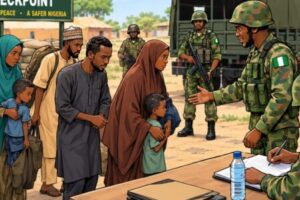


Nigeria’s unfolding coup trial has entered a dramatic and potentially defining stage after an accused colonel reportedly rejected the authority of the military court, introducing a new legal and constitutional challenge into an already explosive case. What began as a government effort to prosecute individuals accused of plotting against President Bola Tinubu’s administration is now evolving into a broader contest over judicial legitimacy, military accountability, and democratic resilience. As proceedings intensify, the refusal to recognize the tribunal may become one of the most consequential moments in the case.
Military Court Tensions On Coup Trial
The current coup trial stems from allegations that a network involving military personnel and civilian collaborators conspired to undermine the Nigerian government. Authorities have pursued multiple charges, including treason, terrorism-related offences, and financial misconduct. Several suspects have pleaded not guilty, while the government has moved aggressively to present evidence and secure witness protections.
The accused colonel’s rejection of the military court introduces a serious procedural dispute. Defence arguments appear to center on whether a military tribunal is the appropriate legal venue, especially given the constitutional implications of trying alleged coup-related offences under military authority rather than in a civilian court. This challenge could slow proceedings and force deeper scrutiny of how Nigeria balances military discipline with legal transparency.
Coup Trial Context Against Military Court
The broader coup trial has already attracted intense national and international attention because it marks one of the most significant alleged threats to Nigeria’s democratic order in recent years. Reports indicate that investigators uncovered extensive communication networks and financial links tied to the alleged conspiracy, with both active and retired security figures implicated.
The case also arrives at a politically sensitive moment for West Africa, where democratic governments continue to confront instability amid a regional resurgence of military interventions. For Nigeria, a country with a long history of coups before returning to civilian rule in 1999, the symbolism of this coup trial is impossible to ignore. How the government handles both justice and public confidence may shape perceptions of institutional strength far beyond this courtroom.
The unfolding coup trial is no longer just about guilt or innocence. It has become a test of how Nigeria’s legal institutions respond when national security collides with constitutional scrutiny. Whether the military court ultimately prevails or jurisdiction shifts elsewhere, OGM News Nigeria will continue monitoring developments in what may become one of the country’s most consequential legal and political reckonings.
Table of Contents
Discover more from OGM News NG
Subscribe to get the latest posts sent to your email.