
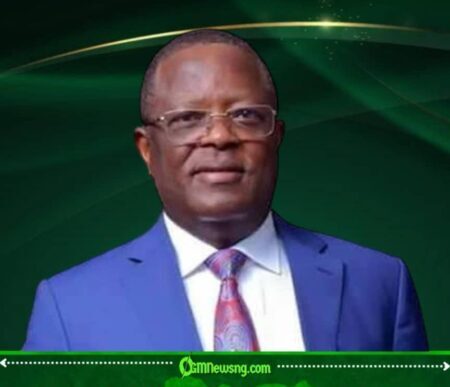
Borrowing has once again become a defining issue in Nigeria’s economic conversation after Minister of Works David Umahi defended the Tinubu administration’s continued reliance on loans to fund major infrastructure and economic projects. Speaking amid rising public concern over Nigeria’s expanding debt profile, Umahi argued that the government cannot abandon critical development plans simply because citizens are uncomfortable with borrowing.
The minister maintained that large-scale projects such as highways, transportation upgrades, and economic reforms require funding levels far beyond the government’s immediate revenue capacity. According to him, the administration believes infrastructure expansion is essential for economic growth, trade improvement, and long-term national competitiveness. His remarks, however, triggered criticism from Nigerians already struggling with inflation, high living costs, and uncertainty surrounding the country’s financial direction.
Umahi’s comments also revived an uncomfortable national question: if subsidy removal and aggressive economic reforms were introduced to strengthen government finances, why does borrowing still remain central to the administration’s survival strategy? Critics argue that while infrastructure projects are important, Nigerians are becoming increasingly anxious about the speed at which public debt obligations continue to grow.
Supporters of the government insist the criticism ignores global realities, noting that many developing countries depend on borrowing to finance expansion and modernization. They argue that without major investments in roads, transport corridors, and industrial infrastructure, Nigeria risks economic stagnation. Some officials have also suggested that future economic gains from completed projects could eventually outweigh current debt concerns.
Nigerians Face More Debt as Government Rejects Calls to Slow Borrowing
Nigeria’s debt profile has remained a sensitive topic for years, particularly as debt servicing costs continue consuming a large portion of government revenue. Economic analysts have repeatedly warned that although borrowing itself is not automatically dangerous, problems emerge when loan-funded projects fail to generate enough economic returns to offset repayment obligations.
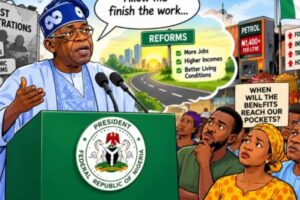
Recent economic reforms under President Bola Ahmed Tinubu, including the removal of fuel subsidies and foreign exchange restructuring, were partly designed to improve fiscal stability and attract investment. However, ordinary Nigerians continue facing soaring food prices, transportation costs, and inflationary pressure, leading many citizens to question whether new loans will genuinely improve daily life or simply deepen long-term financial strain.
International financial institutions have previously encouraged Nigeria to widen its tax base, improve revenue collection, and reduce dependence on oil earnings rather than rely excessively on debt accumulation. Economists have also emphasized that transparency in loan usage will become increasingly important as public skepticism grows. In political circles, opposition figures are already using the borrowing debate to frame the administration as fiscally aggressive at a time when citizens are demanding economic relief.
There is also concern that the language surrounding the issue may further inflame public frustration. Umahi’s “whether we like it or not” remark has been interpreted by critics as politically blunt and dismissive, although supporters say he was merely acknowledging economic realities in a country with enormous infrastructure deficits and limited fiscal flexibility.
For now, the Tinubu administration appears determined to continue balancing economic reform with aggressive infrastructure expansion, even as the debt debate intensifies nationwide. Whether the Borrowing strategy eventually delivers visible economic transformation or leaves future governments battling heavier financial burdens may become one of the defining political and economic stories of this administration. OGM News Nigeria understands that public attention will remain fixed not only on how much Nigeria borrows, but also on whether citizens can actually see and feel the promised development attached to the growing Debt profile.
Table of Contents
Discover more from OGM News NG
Subscribe to get the latest posts sent to your email.