

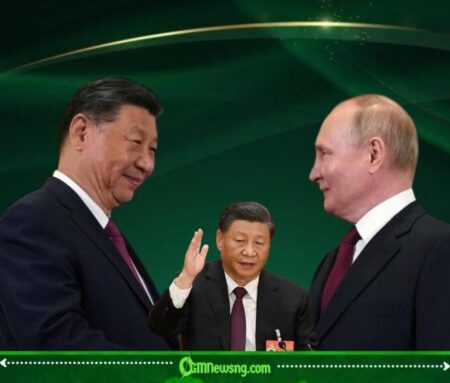
Chinese President Xi Jinping says China and Russia must work together to build a “just system of global governance,” a declaration that has intensified international debate over the future direction of global leadership and whether the current balance of power is entering a new era of competition. The statement, delivered amid growing geopolitical friction between major world powers, immediately attracted attention because of its timing, language, and broader strategic implications.
The phrase “Global Governance” may sound diplomatic and technical, but analysts argue it represents something much larger: a struggle over who shapes international rules on trade, security, economics, and political influence in the decades ahead. While Beijing and Moscow present the idea as a move toward fairness and multipolar cooperation, critics in Western capitals increasingly see it as a challenge to the post-World War II global order largely influenced by the United States and its allies.
China and Russia Push for “Fairer” World Order Amid Rising Tensions
Xi Jinping’s remarks come as China and Russia continue strengthening ties across multiple sectors, including energy agreements, military coordination, and strategic diplomacy. Officials in both countries have repeatedly emphasized the need for a world system that they claim reflects the interests of developing nations rather than concentrating influence among a few Western powers. The latest comments reinforce years of messaging from both governments that global institutions should evolve to reflect shifting economic and political realities.
The term “Global Governance” itself has become politically loaded. Supporters of Beijing’s position argue that many international institutions were created during periods when emerging economies had limited influence, leaving countries across Asia, Africa, and Latin America underrepresented. Critics, however, argue that China and Russia often invoke fairness while simultaneously facing accusations related to censorship, territorial disputes, political repression, and strategic aggression. In diplomatic circles, the debate increasingly centers not on whether global systems should change, but on who benefits most from those changes.
China-Russia Alliance Raises Questions About Future of Global Democracy
Recent years have seen China expand its international footprint through infrastructure investments, technology exports, and diplomatic partnerships across multiple continents. Russia, meanwhile, has leaned heavily into strategic alliances as tensions with Western governments remain high following conflicts and sanctions. Together, both nations have increasingly portrayed themselves as defenders of sovereignty against what they describe as excessive Western interference in global affairs.
The broader context surrounding Xi’s statement also reflects mounting uncertainty within the international system itself. Trade disputes, wars, energy instability, cyber-security threats, and competition over artificial intelligence have all contributed to a growing perception that global politics is entering a more fragmented era. Even some neutral countries are now carefully balancing relationships between Washington, Beijing, and Moscow, aware that economic survival may increasingly depend on navigating competing centers of power rather than relying on a single dominant alliance.
As discussions around Global Governance continue to grow louder, many governments may publicly describe the debate as diplomatic theory while privately preparing for long-term geopolitical rivalry. Whether Xi Jinping’s remarks represent genuine reform, strategic messaging, or the opening chapter of a deeper global contest remains uncertain. What is increasingly clear, however, is that the conversation about who shapes the future international order is no longer happening quietly behind closed doors, and OGM News Nigeria will continue monitoring developments surrounding the evolving China-Russia alliance and its global implications.
Table of Contents
Discover more from OGM News NG
Subscribe to get the latest posts sent to your email.