









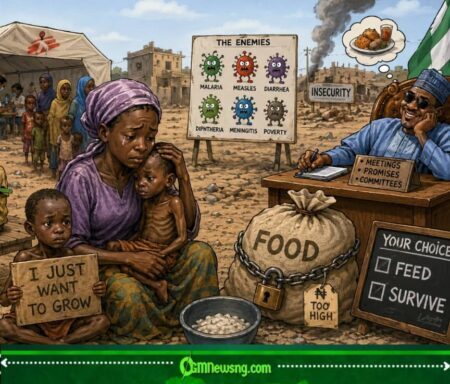
The Malnutrition Crisis wey humanitarian emergency experts don raise alarm about no be ordinary warning again—it don turn full-blown national emergency. Across several parts of Nigeria, especially for vulnerable communities and children, hunger, sickness, and insecurity dey work together like bad business partners. While many people still dey focus on politics and economic promises, another quieter battle dey happen inside homes and overcrowded hospitals, where parents dey watch their children fight for strength every day.
Recent humanitarian emergency findings show say over 440,000 children received treatment for acute malnutrition crisis,with many requiring urgent specialist care. This number no just represent statistics; na families, tears, and communities under pressure. As inflation dey push food beyond reach and insecurity dey stop farming and movement, ordinary survival don become luxury for plenty households.
Humanitarian Emergency Came Through For Malnutrition Crises For Children
The Humanitarian Emergency dey spread beyond hunger alone. Health workers report say malnutrition crises dey weaken children and make diseases like malaria, measles, diphtheria, and meningitis more dangerous. For many clinics, children no dey only battle empty belleh—they dey battle multiple illnesses at once.
Medical teams across affected states say treatment centres dey overstretched, with many facilities handling far more patients than expected. Mothers for rural communities still face dangerous journeys to reach healthcare, while weak referral systems and transport problems continue to delay urgent treatment. The result be say many preventable conditions dey turn fatal simply because help no reach on time.
Malnutrition Crisis Over Children
The roots of this Malnutrition Crisis deep pass today’s headlines. Conflict and displacement don force many families away from farms. Flooding and drought don damage food production. Rising prices for staple foods don make balanced meals almost impossible for poor households. Add shrinking humanitarian emergency funding to the mix, and the pressure on vulnerable communities only grows heavier.
Experts also warn say northern Nigeria remains one of the hardest-hit areas, with previous reports showing sharp increases in severe child malnutrition and even deaths linked to delayed treatment and limited support. The warning now be clear: if immediate action no happen, today’s emergency fit become tomorrow’s catastrophe.
The Malnutrition Crisis no dey shout like campaign rally, but e dey speak through every weak child, every overcrowded clinic, and every parent wey no know where next meal go come from. As humanitarian emergency continue to ring alarm bell, Nigerians go dey watch whether urgent solutions go finally match the seriousness of the emergency—or whether hunger go continue to write headlines by itself. OGM News Pidgin go keep eye on this developing matter.
Table of Contents
Discover more from OGM News NG
Subscribe to get the latest posts sent to your email.