








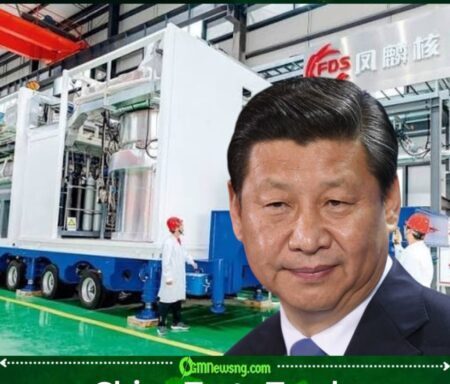
China is reportedly testing a prototype nuclear reactor designed to be compact enough for transport on a truck, marking a significant development in portable energy systems and advanced engineering. The concept reflects an effort to create flexible, mobile power solutions capable of operating in remote or rapidly changing environments.
Such technology could potentially provide energy to isolated regions, military operations, or emergency situations where traditional infrastructure is unavailable or impractical. The ability to deploy a nuclear reactor on demand represents a major shift from conventional large-scale nuclear facilities.
China’s initiative highlights its broader focus on innovation in energy production, particularly in areas that combine efficiency, mobility, and technological advancement.
The Concept of Portable Nuclear Power
China’s prototype reactor is part of a growing interest in small modular reactors, which are designed to be more compact and easier to deploy than traditional nuclear plants. These systems aim to reduce construction time while maintaining safety and efficiency.
Portable nuclear technology presents both opportunities and challenges, including considerations around safety, regulation, and public perception.
The concept continues to attract attention as countries explore alternative energy solutions in response to evolving global demands.
China and Strategic Innovation
China has consistently invested in advanced technologies that enhance its strategic capabilities, and the development of a mobile nuclear reactor fits within this broader pattern. Such innovations can provide both civilian and strategic advantages.
China’s approach emphasizes adaptability, allowing energy systems to be deployed in diverse settings with minimal infrastructure requirements.
China’s efforts also reflect a competitive landscape in which nations seek to lead in next-generation energy technologies.
Potential Applications and Use Cases
China’s mobile reactor could have a range of applications, from powering remote industrial operations to supporting disaster relief efforts. In situations where rapid deployment of energy is critical, such systems could offer unique advantages.
The technology may also be considered for use in regions with limited access to stable power grids, providing a more consistent energy source.
However, practical implementation would require addressing logistical, environmental, and safety considerations.
Global Reactions
China’s testing of a truck-mounted nuclear reactor has drawn attention from the international community, with analysts examining both its potential benefits and risks. Reactions vary depending on perspectives related to energy policy and security concerns.
Some observers view the development as a step forward in energy innovation, while others highlight the need for strict regulatory oversight.
China’s actions are likely to influence discussions about the future of nuclear technology worldwide.
Future Outlook for Mobile Energy Systems
China’s prototype represents a glimpse into the future of energy systems, where mobility and flexibility may play an increasingly important role. Advances in technology could enable more efficient and safer designs over time.
The continued evolution of such systems will depend on research, testing, and international cooperation to ensure safe deployment.
Ultimately, mobile nuclear reactors could become a significant component of the global energy landscape if challenges are effectively addressed.
Table of Contents
Discover more from OGM News NG
Subscribe to get the latest posts sent to your email.