









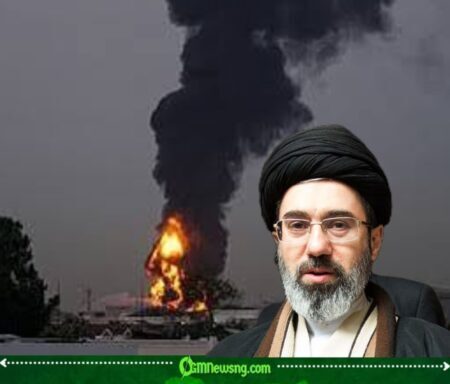
Iran said a missile linked to ongoing conflict involving the United States and Israel struck near its Bushehr nuclear power plant, raising immediate concerns about nuclear safety in the region. Iran stated that the projectile landed in the vicinity of the facility but emphasized that there was no confirmed damage to the reactor itself.
The announcement comes amid escalating military exchanges across the Middle East, where strikes and counterstrikes have intensified tensions between regional and global powers. Officials confirmed that the incident occurred close to sensitive infrastructure, prompting swift communication with international nuclear authorities.
Initial reports indicated that radiation levels remained normal and no casualties were recorded, easing immediate fears of a nuclear accident.
Rising Tensions Around Strategic Nuclear Infrastructure
Iran said the incident highlights the growing risks of military operations occurring near critical nuclear facilities.
Iran warned that continued escalation could lead to unintended consequences with potentially severe environmental and humanitarian impacts.
The Bushehr nuclear power plant, located along the Persian Gulf, is Iran’s only operational nuclear reactor and plays a significant role in its civilian energy program. Its proximity to conflict zones has long made it a point of concern for international observers.
Experts have repeatedly cautioned that any strike near an active nuclear facility—even if indirect—could trigger broader regional consequences if safety systems were compromised.
Iran Confirms No Immediate Damage
They told international nuclear authorities that while the surrounding area was hit, the plant itself did not sustain damage. Iran reassured that operations at the facility continue as normal and that staff remain safe.
The International Atomic Energy Agency (IAEA) responded by urging all parties involved in the conflict to exercise maximum restraint to prevent a potential nuclear incident.
There statement helped calm initial fears, but the situation continues to be monitored closely by global organizations concerned about nuclear safety.
Global Concerns Over Escalation
The incident has intensified global concerns about the risks of military activity near nuclear installations. Governments and international bodies have stressed the importance of avoiding actions that could endanger such facilities.
The Bushehr plant has previously been identified as particularly sensitive due to the presence of nuclear material and its coastal location. Any direct hit could have far-reaching environmental consequences beyond Iran’s borders.
Diplomatic voices have called for de-escalation, warning that continued conflict increases the likelihood of accidents or unintended escalation.
Iran Warns of Serious Consequences
Iran warned that continued attacks near its nuclear infrastructure could provoke serious responses and deepen the conflict. Iran emphasized that it considers the safety of its nuclear facilities a matter of national security.
Officials reiterated that any threat to Bushehr or similar sites would be treated with urgency and could influence Iran’s broader military and diplomatic strategy.
They also stressed that the international community should take a stronger stance against actions that risk nuclear safety in conflict zones.
Ongoing Monitoring and International Response
International agencies, including the IAEA, continue to monitor developments closely as tensions remain high. Inspectors and analysts are focused on ensuring that no hidden damage or long-term risks emerge from the incident.
Energy markets and regional governments are also watching closely, given the strategic importance of both the Strait of Hormuz and nearby infrastructure.
As the situation evolves, the incident near Bushehr serves as a stark reminder of how quickly geopolitical conflict can intersect with nuclear safety concerns, raising the stakes for all parties involved.
Table of Contents
Discover more from OGM News NG
Subscribe to get the latest posts sent to your email.