









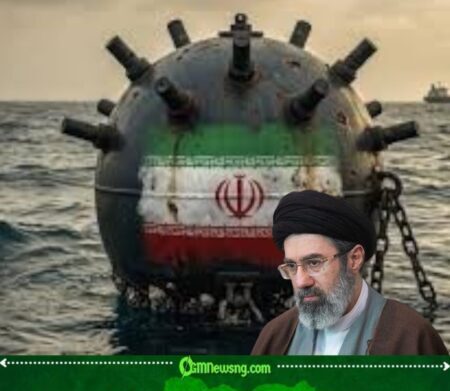
Iran has begun planting naval mines in the Strait of Hormuz, a move that signals its ability to threaten one of the most important energy routes in the world. The narrow waterway carries roughly one-fifth of the world’s oil supply, making any disruption capable of sending shockwaves through global markets and energy systems.
Reports from intelligence sources indicate that dozens of mines may already have been deployed in recent days, with the possibility that hundreds more could be placed if tensions escalate further. Analysts warn that such a strategy could severely restrict shipping traffic through the passage and dramatically increase risks for commercial vessels navigating the region.
The Strait of Hormuz has long been considered the world’s most critical maritime chokepoint for oil transportation. Tankers carrying crude from Gulf producers including Saudi Arabia, Iraq, and the United Arab Emirates must pass through this narrow corridor to reach global markets, meaning even small disruptions can trigger significant economic consequences.
Iran Signals Strategic Leverage Over Global Energy
Iran’s potential use of naval mines is widely viewed as part of a broader strategy to demonstrate leverage over global energy flows. By threatening to block or complicate passage through the strait, Tehran can signal its ability to impose costs on countries dependent on Gulf oil exports.
Security analysts note that mining the strait changes the nature of the crisis compared to simply threatening to close it with naval patrols. Once mines are deployed, clearing them becomes a dangerous and time-consuming process that could deter shipping companies and insurers from operating in the area.
Iran possesses thousands of naval mines and a fleet of small vessels capable of deploying them quickly across strategic points in the waterway. Such capabilities mean that even a limited mining operation could dramatically disrupt maritime traffic in the region.
Global Markets React to Escalating Risk
Financial markets and energy traders are closely watching developments around the Strait of Hormuz as fears of supply disruptions grow. Oil prices have already experienced volatility as traders weigh the possibility of prolonged instability in the Gulf.
Energy analysts warn that any sustained disruption in the strait could lead to one of the largest oil supply shocks in recent decades. Because nearly 20 percent of the world’s crude oil and large volumes of liquefied natural gas pass through the route, even temporary closures could ripple across global industries.
Governments and international organizations are reportedly considering contingency measures, including the possible release of strategic petroleum reserves, to help stabilize markets if the situation deteriorates further.
Military and Security Implications
The presence of naval mines also raises serious military and security concerns for countries with interests in the region. Clearing mines in a conflict zone requires specialized vessels and extensive coordination, and the process could take weeks or even months depending on the scale of deployment.
Iran’s naval forces, particularly the Islamic Revolutionary Guard Corps, have previously emphasized asymmetric tactics designed to challenge larger naval powers operating in the Gulf. These tactics include the use of fast attack boats, drones, coastal missile batteries, and underwater mines.
Military planners warn that even limited mine warfare could create a highly dangerous environment for both commercial ships and naval vessels, increasing the risk of confrontation between regional and global powers operating near the strait.
Energy Infrastructure and Supply Chain Risks
Iran’s actions highlight the vulnerability of global supply chains that depend heavily on energy shipments passing through the Gulf. Major industries—including aviation, shipping, agriculture, and manufacturing—could feel the effects of disruptions to oil and natural gas exports.
Several Gulf countries have developed alternative pipeline routes that allow some oil to bypass the Strait of Hormuz, but these systems can only handle a portion of the region’s total production. As a result, a large share of exports still relies on safe passage through the waterway.
Energy experts caution that prolonged instability could trigger shortages, higher fuel prices, and broader economic impacts that extend far beyond the Middle East.
International Diplomatic Pressure Mounts
Diplomatic pressure is increasing as governments around the world call for efforts to prevent further escalation in the region. Many countries depend heavily on Gulf energy exports and have strong incentives to maintain open shipping lanes.
Some policymakers argue that international cooperation will be necessary to ensure the continued safety of maritime routes and to prevent the conflict from spreading beyond the immediate region.
For now, the situation remains highly fluid as political leaders, military officials, and energy markets all react to the possibility that disruptions in the Strait of Hormuz could quickly evolve into a crisis with global economic consequences.
Table of Contents
Discover more from OGM News NG
Subscribe to get the latest posts sent to your email.