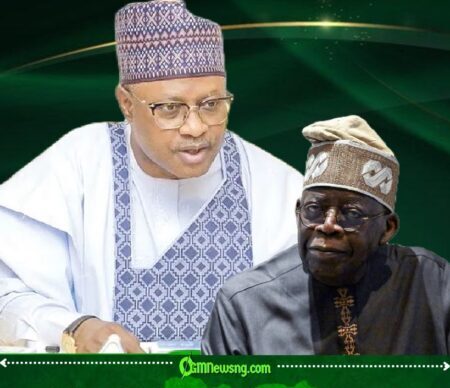





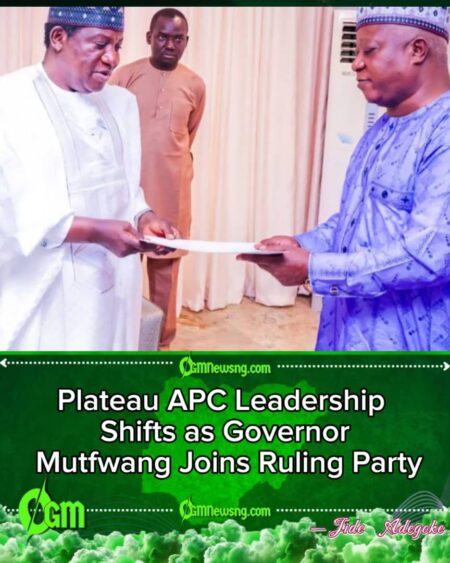
Simon Lalong, senator representing Plateau South and a former governor of the state, has announced the end of his leadership role within the All Progressives Congress (APC) in Plateau following the defection of Governor Caleb Mutfwang from the Peoples Democratic Party (PDP) to the APC. The transition marks a significant political realignment in the state, effectively reshaping the balance of power within the ruling party’s local structure.
The development was formally confirmed on Friday when Nentawe Yilwatda, the national chairman of the APC, publicly announced Governor Mutfwang’s entry into the party. Shortly after the announcement, Lalong stated that his tenure as the party’s leader in Plateau had come to an end, acknowledging the political implications of the governor’s defection.
Mutfwang’s Defection and National Party Endorsement
Governor Caleb Mutfwang’s defection to the APC represents one of the most consequential political shifts in Plateau State in recent years. As a sitting governor, his move brings with it considerable political weight and influence, both within the state and at the national level.
The APC’s national leadership, led by Chairman Nentawe Yilwatda, welcomed Mutfwang into the party, describing his defection as a boost to the party’s strength and prospects in Plateau. Party insiders say the move aligns with broader efforts by the APC to consolidate power across states previously controlled by opposition parties.
Political analysts note that the governor’s entry into the APC effectively reorders the party’s internal hierarchy in Plateau, given the traditional influence and authority accorded to a sitting governor within party structures.
Lalong’s Statement and the End of an Era
Reacting to the development, Simon Lalong stated plainly that his leadership role in the Plateau APC had ended. His remarks suggest a recognition of political convention, where party leadership at the state level typically gravitates toward the sitting governor.
Lalong, who previously served as Plateau State governor under the APC before moving to the Senate, has long been regarded as a central figure in the party’s affairs within the state. His decision to step aside signals an orderly transition rather than an open contest for control.
Sources close to the party indicate that Lalong is expected to continue playing a role at the national level, leveraging his experience and legislative position, even as day-to-day leadership of the Plateau APC shifts to the governor.
Implications for Plateau Politics
The leadership transition is expected to have immediate and long-term consequences for Plateau’s political landscape. With the governor now aligned with the ruling party at the federal level, cooperation between state and federal authorities may increase, potentially influencing policy direction and resource allocation.
Within the APC, attention is likely to turn to party unity and integration, as former PDP loyalists align with long-standing APC members. How effectively the party manages this internal adjustment could shape its performance in future elections.
Observers say the coming months will reveal whether the leadership change strengthens the APC’s footing in Plateau or introduces new internal challenges as political interests are rebalanced.
Table of Contents
Discover more from OGM News NG
Subscribe to get the latest posts sent to your email.