








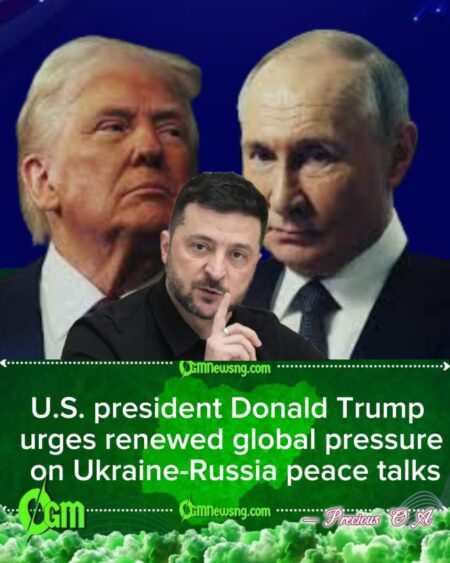
U.S. president Donald Trump, according to senior aides, has grown increasingly exasperated with what he describes as the “unwillingness of both Ukraine and Russia to compromise,” a position he believes is prolonging unnecessary devastation. His frustration reportedly stems from recent briefings showing little movement in diplomatic channels, despite repeated behind-the-scenes efforts to negotiate a temporary ceasefire. Advisors say he has pushed for a more assertive diplomatic approach, urging negotiators to pursue alternative pathways that might reopen stalled talks.
Donald Trump, reacting to new intelligence reports, has questioned why both nations continue to hold firm positions when international pressure is mounting. He noted that various ally-led initiatives have failed to bring either side closer to agreement, raising concerns that the conflict may drift into an indefinite standoff. His remarks have sparked internal conversations about the limits of U.S. influence in a conflict where mutual distrust overshadows political incentives.
Donald Trump, in private discussions with Cabinet officials, emphasized that the humanitarian cost of the prolonged hostilities is no longer acceptable. He reportedly demanded updated recommendations on what he calls “creative diplomatic interventions,” arguing that the U.S. must avoid repeating historical patterns where wars linger because global actors fear political risks. His stance is reshaping internal deliberations on how Washington engages with both Kyiv and Moscow moving forward.
SHIFTING INTERNATIONAL PRESSURES
Donald Trump, expressing disappointment with recent European consultations, argued that many regional partners have not done enough to push both sides toward constructive dialogue. He insisted that broader coordination is needed, particularly among NATO members who have maintained differing approaches to the conflict. This divergence has generated quiet tension, complicating the administration’s efforts to build a unified diplomatic front.
Donald Trump, after speaking with several European leaders, reportedly voiced outrage that humanitarian pledges have yet to be matched with consistent diplomatic engagement. He believes this imbalance weakens international credibility and allows both Russia and Ukraine to delay meaningful negotiations. His concerns highlight growing friction among allies about the strategic direction of ongoing peace efforts.
Several foreign-policy analysts argue that Washington’s options are narrowing as battlefield conditions stabilize in certain regions. They warn that without a breakthrough, the war could move into a politically entrenched phase resembling other long-running global conflicts. Their assessments mirror Trump’s frustrations while raising further questions about how international coalitions can adapt to the shifting realities on the ground.
DIPLOMATIC DEADLOCK AND U.S. STRATEGY
Donald Trump, during a high-level Situation Room briefing, pressed officials for clearer explanations as to why proposed ceasefire frameworks have not gained traction. He reportedly challenged negotiators to reconsider their assumptions about what incentives each side would find acceptable. His insistence on direct and measurable progress reflects a growing impatience within the administration.
Donald Trump, according to sources familiar with the meeting, criticized the “cautious messaging” being used in diplomatic outreach. He suggested that such neutrality may unintentionally signal weakness, thereby reinforcing the stalemate. His comments have renewed debate among policymakers about whether Washington should adopt a firmer tone to force momentum in negotiations.
Analysts close to the administration say that internal discussions now revolve around whether revised security guarantees or economic agreements could shift calculations for either side. They describe an increasingly urgent environment in which multiple agencies are reassessing tools that might break the diplomatic impasse. Many acknowledge that achieving even a temporary ceasefire requires overcoming significant political reluctance in both Kyiv and Moscow.
REGIONAL STABILITY AND HUMANITARIAN CONCERNS
Neighboring governments have grown anxious over the conflict’s prolonged duration, fearing spillover effects that could destabilize their borders. Some have quietly expanded humanitarian corridors, anticipating additional displacement if negotiations fail entirely. Their apprehension underscores the broader regional impact of the war, which Trump has cited as a major reason for his renewed diplomatic push.
Humanitarian organizations continue to warn about the mounting toll on civilians trapped between shifting conflict zones. Many relief groups report increasing difficulty accessing vulnerable populations as infrastructure degradation worsens. This alarming trend has strengthened Trump’s argument that a prolonged stalemate will deepen suffering and complicate recovery long after hostilities end.
Observers note that several countries are reconsidering their long-term support commitments as economic pressures rise at home. These reassessments could complicate aid delivery and weaken diplomatic leverage at a critical moment. Trump’s frustration reflects broader fears that diminishing international engagement could allow the conflict to harden into a multiyear crisis.
MILITARY DEVELOPMENTS AND STRATEGIC RISKS
Donald Trump stressed privately that recent battlefield stagnation should serve as a catalyst for renewed diplomatic urgency, not complacency. He reportedly challenged intelligence officials to outline how continued military operations might limit future negotiation opportunities. His focus on long-term consequences signals an attempt to shift the conversation away from tactical victories and toward strategic resolution.
Military experts caution that unpredictability on the front lines still carries risks for sudden escalation. They highlight concerns that miscalculations or unauthorized engagements could widen the conflict before diplomatic plans mature. These assessments echo Trump’s warnings that without decisive action, circumstances could spiral beyond the control of all involved parties.
Defense officials continue to monitor the situation closely, acknowledging that both Ukrainian and Russian forces remain deeply entrenched. They believe the conflict has reached a critical stage in which battlefield developments alone are unlikely to shape political decisions. This perspective supports Trump’s growing insistence on diplomatic breakthroughs rather than continued reliance on military pressure.
PATHS TOWARD POSSIBLE RESOLUTION
Donald Trump signaled that he expects a fresh set of proposals from his diplomatic team within weeks, urging them to prioritize frameworks that encourage incremental but verifiable commitments. His approach suggests he wants to move negotiations away from maximalist demands and toward achievable short-term agreements. Officials say he views these steps as essential to reducing tensions and establishing lasting communication channels.
Negotiators are reportedly exploring new formats for talks that could include mediated back-channels or regionally supervised confidence-building measures. These ideas aim to create conditions in which both sides can participate without appearing politically weakened. Such mechanisms may offer the most realistic route toward easing the current stalemate, even if full resolution remains distant.
Some experts argue that the U.S. must prepare for a scenario in which neither side is ready to compromise in the immediate future. They emphasize that maintaining diplomatic pressure while mitigating humanitarian fallout will require sustained coordination across agencies. Trump’s visible frustration reflects the difficult reality of navigating a conflict where political pride, territorial ambitions, and international expectations remain deeply intertwined.
Table of Contents
Discover more from OGM News NG
Subscribe to get the latest posts sent to your email.