






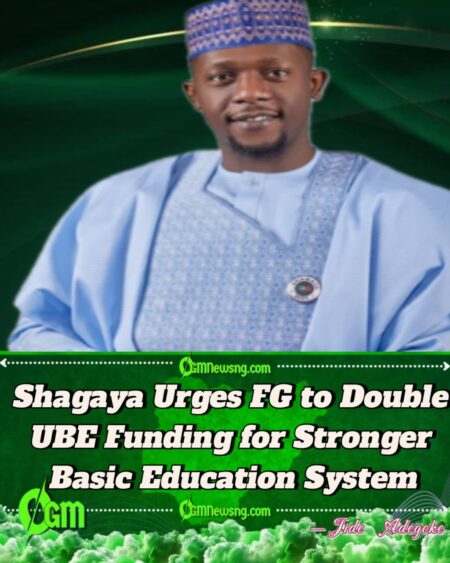
Nigerian lawmaker, Aminu Shagaya, has called for an urgent increase in funding for the Universal Basic Education (UBE) programme, stressing that doubling current allocations is vital to improving access, infrastructure, and quality learning outcomes across the country’s public primary and junior secondary schools. Shagaya argued that without a deliberate financial boost, Nigeria risks perpetuating cycles of illiteracy and poor educational attainment, especially in rural areas.
Expanding Access and Quality in Basic Education
Shagaya emphasized that the UBE scheme, designed to provide free and compulsory education for children aged 6 to 15, is being hindered by inadequate funding and weak implementation at state levels. He noted that despite government efforts, a significant number of schools still operate without proper facilities, qualified teachers, or learning materials.
“The current funding structure cannot sustain our growing population of school-age children,” he stated. “If we truly want to prepare our next generation for global competitiveness, we must double UBE funding and ensure strict monitoring of its use.”
According to Shagaya, increasing investment in teacher training, school infrastructure, and learning materials will bridge the educational gap between urban and rural regions, helping the country meet the Sustainable Development Goal on inclusive and equitable quality education.
Challenges of Implementation and Accountability
While commending the federal and state governments for maintaining the UBE scheme, Shagaya highlighted recurring issues of mismanagement, delayed counterpart funding, and weak supervision. He urged education boards at all levels to adopt transparent funding practices and strengthen oversight mechanisms.
“Allocations alone will not solve our problems,” he cautioned. “We must ensure every naira released for education reaches the classroom. Proper accountability and data-driven policy evaluation are key to building public trust and achieving real impact.”
Experts have similarly warned that without reforming funding mechanisms, increased budgets may not translate into tangible improvements in student learning or school environments.
Building a Sustainable Future Through Education
Shagaya concluded that Nigeria’s human capital development depends largely on how seriously the government prioritizes basic education. He called for a bipartisan commitment in the National Assembly to increase education funding in the 2026 budget cycle and align state governments with federal objectives.
“Our children deserve better classrooms, better teachers, and better opportunities,” he said. “Education is not an expense—it is an investment in the nation’s future.”
Table of Contents
Discover more from OGM News NG
Subscribe to get the latest posts sent to your email.